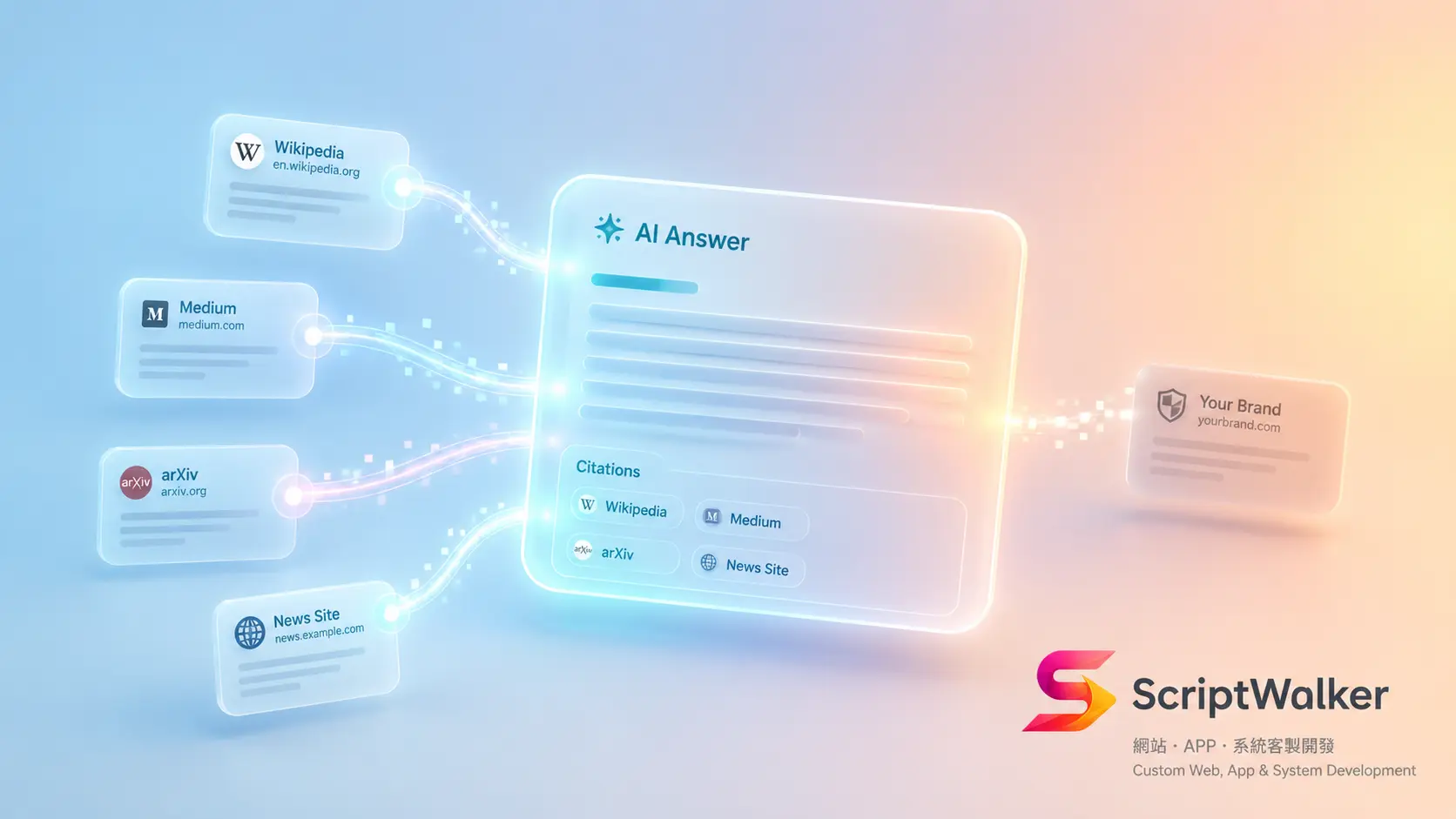
If most of your marketing budget last year still went into "make our own blog rank," the 2026 data has an uncomfortable message: that money may be aimed at the wrong target. Per Conductor's 2026 AEO/GEO Benchmarks Report (21.9M Google searches analyzed), about 25.11% (5.5M) triggered an AI Overview, and on those queries organic CTR fell an average of 61%. The bigger story isn't fewer clicks — it's who the AI answer cites: earned, third-party sites, not your own marketing pages.
Zoom out on market structure. Over the last 12–18 months the entry point shifted from "blue links" to an "answer layer": Google AI Mode crossed a billion monthly users in a year with queries doubling each quarter; ChatGPT and Gemini together take ~86% of AI search usage and Perplexity ~15% of AI referral traffic. When the answer is generated on the page, users no longer need to click through — the structural cause of "zero-click." But the real rule change is what AI prefers as a source.
Parallel studies point the same way. GEO platform Profound, sampling 27M real AI answers, found up to 97.4% of AI citations come from non-Tier-1 (earned / third-party) media, not brand-owned pages. And it fragments: Superlines' analysis showed the same brand's citation volume can differ 615x between Grok and Claude. AI visibility isn't one score — it's a hand you must play separately on each engine.
Below: what these numbers mean for an SMB, what each of three roles should do today, how the GEO tools compare, and a "no SaaS subscription" minimum-viable GEO routine you can run yourself.
What the Numbers Are Saying
String three datasets together and the conclusion is hard. (1) Traffic is intercepted at the answer layer — pages with an AI Overview see overall CTR around 8% vs ~15% on traditional result pages, nearly halved. (2) The cited sources are third-party — Profound's 97.4% means the "recommendations" users see in AI answers come mostly from review sites, listicles, forums, news and Q&A, not your marketing page. (3) Every engine plays differently — that 615x gap means you can't only watch Google; ChatGPT, Gemini, Perplexity and Grok each have their own sourcing bias. For an SMB that only spends on "our own site's SEO," together this says: however polished your site is, AI may simply not cite it. Google Search Central has folded AI features into official guidance, all pointing at making content machine-extractable and citable.
Immediate Actions
- Brand owners / SMB owners: treat "GEO visibility" as a metric parallel to site traffic. Do one thing this week — type your 5 highest-intent purchase questions into ChatGPT, Gemini and Perplexity, and record who they recommend and which sites they cite. That list is where you need to get in.
- Marketers / SEOs: shift part of the budget from "another own-blog post" to "get third parties to mention you" — industry listicles, review-site inclusion, press, social and forum Q&A. Add FAQ/HowTo structured data so AI can extract your facts.
- Developers / agencies: make schema (FAQPage, Product, Organization) and clean semantic HTML a delivery standard, and build a weekly "AI citation snapshot" script that logs each client's citations across engines as a trend.
GEO Measurement Tools
| Tool | What it does | Price tier | Best for |
|---|---|---|---|
| Profound | Tracks brand citations / source distribution across many AI engines | Enterprise (high) | Larger brands needing full reporting |
| Scrunch AI | Monitors brand presence and sentiment in AI answers | Mid | Marketing teams, agencies |
| Otterly.AI / Peec | Lightweight tracking of AI Overview and ChatGPT mentions | Low–mid (subscription-friendly) | SMBs, solo SEOs |
| Conductor | AEO/GEO benchmarks + content optimization guidance | Enterprise (high) | Larger content teams |
What They Won't Tell You
- Topping AI citations doesn't guarantee orders. Being cited is visibility, not conversion. AI often cites you without sending a click; users remember the answer, not you. Treat citations as brand exposure, not directly attributable revenue.
- Tool numbers drift. The same prompt can answer differently each time, and tools sample differently, so scores jump daily. Watch trends, not single-day figures, or you'll keep rewriting copy to chase noise.
No-SaaS SMB Alternative
- Manual prompt sweep: weekly, ask the same 10 purchase-intent questions in ChatGPT/Gemini/Perplexity and paste "who's recommended, which sites cited" into a Google Sheet to grow your own trend.
- Free official tools: use Google Search Console to spot pages losing clicks (an AI Overview signal) and optimize against them.
- Earned-media list: name the 5–10 third-party sites (listicles, reviews, forums) AI cites most in your niche, and pursue inclusion or a mention — worth more than ten more own-site posts.
FAQ
Are GEO and SEO two different things?
Same foundation, different goal. SEO chases "rank high in results"; GEO chases "get cited in the AI answer." Clean semantic HTML, structured data and authority help both, but GEO additionally depends on how third parties describe you — something classic SEO rarely covers.
Does an SMB need to buy a GEO tool?
Not early on. Start with a manual prompt sweep plus Search Console; move to subscription-friendly tools like Otterly or Peec only when you need to prove ROI or scale reporting.
Why does AI rarely cite my own site?
AI favors "neutral-looking" third parties — reviews, listicles, news, forums. Your marketing page reads as self-promotion. The fix isn't making the site more ad-like; it's adding factual content (FAQ, specs, HowTo) and getting mentioned by third parties.
How long until GEO shows results?
Usually faster than SEO but still in months. After third-party inclusion, AI needs to re-crawl and recompose answers, so 4–8 weeks to see citation shifts depending on engine update cadence.
My Take
Mainstream GEO advice says "make your content more AI-citable." My read is blunter: for most SMBs, your own site isn't the main GEO battlefield — other people's sites are. Profound's 97.4% earned-media isn't noise, it's structure: to look neutral, AI systematically prefers third-party sources. So pouring more budget into "optimize the site once more" has rapidly diminishing returns. For an agency like ScriptWalker that opens a clear service line: instead of selling "site SEO," repackage delivery as a "GEO visibility program" — schema and semantic structure as the base, a weekly multi-engine citation sweep as the dashboard, plus content engineering that pushes clients into industry third-party listicles and review sites. Clients never really wanted ranking numbers; they wanted to be recommended — and in 2026, that happens off your website.