AI & Automation

Perplexity Starts Paying You for Being Cited: A $42.5M Pool, an 80/20 Split — But the Money Isn't What You Should Chase

2026.06.22 · 124 views
Perplexity Starts Paying You for Being Cited: A $42.5M Pool, an 80/20 Split — But the Money Isn't What You Should Chase

A $42.5M pool, an 80/20 split, a +50% quality multiplier — Perplexity now pays for citations, but the real signal is hidden in the weighting formula.

Share:

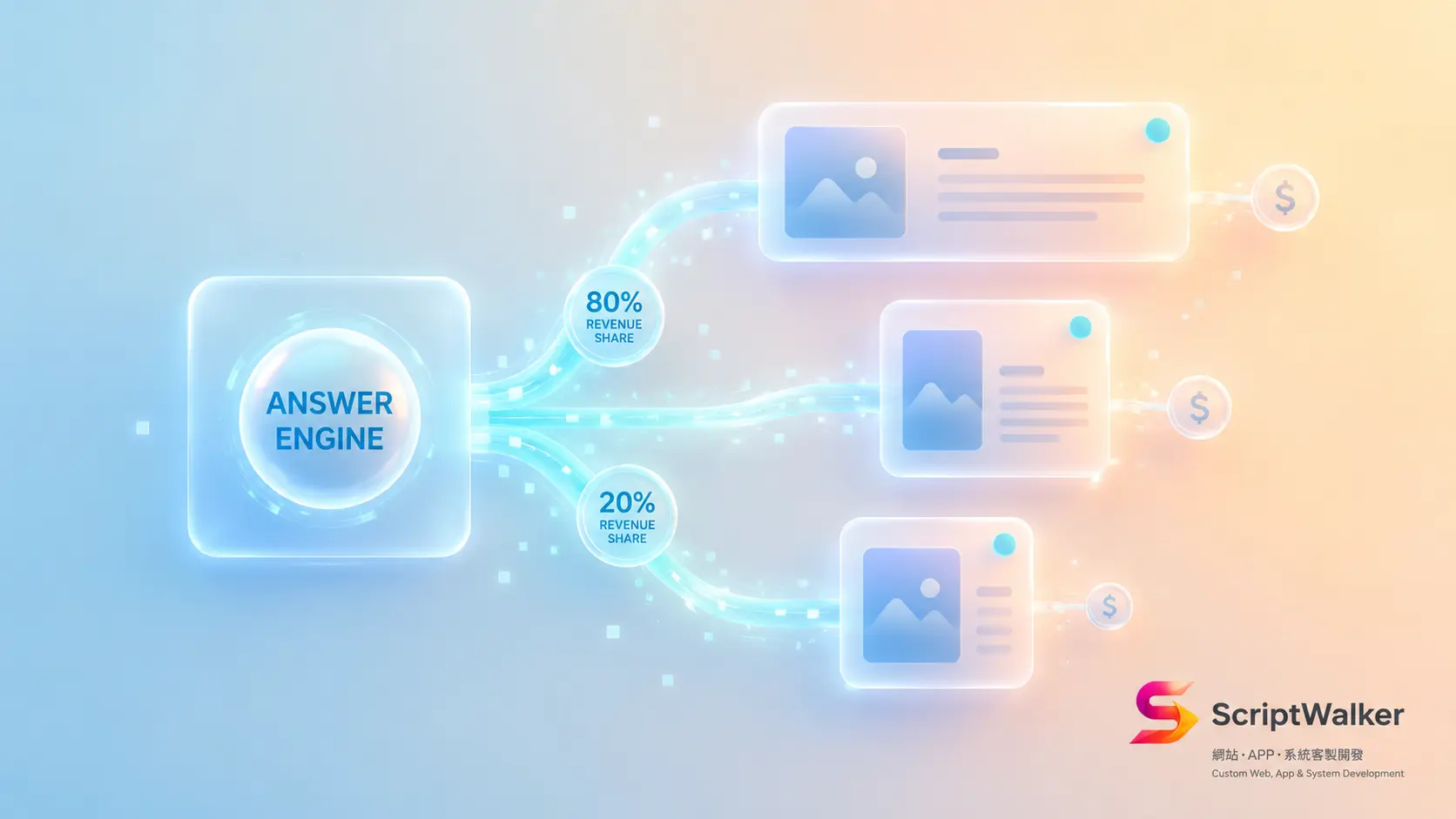
AI answer engines have finally started sharing money with content creators. Perplexity's Comet Plus publisher program centers on a $42.5 million publisher payout pool: from each $5/month subscriber, publishers take 80% and Perplexity keeps 20% for compute and platform costs. By Q1 2026, more than 2,400 publishers had enrolled, plus 20-plus major media partners (Time, Fortune, Der Spiegel as launch partners). One line: being cited by AI now has a quantifiable cash flow, not just a mention.

The timeline makes it clearer. Over the past 12–18 months, AI answer engines and publishers fought a cold war: media sued AI for "taking traffic without paying," while AI answered questions off scraped content and kept the clicks on its own surface. Zero-click became the norm — 92–94% of Google AI Mode sessions are zero-click, meaning only 6–8% lead to an external site. Perplexity's revenue-share is an attempt, under that "AI eats the clicks" pressure, to trade money for licensed peace.

What are rivals doing? Google took another path: an AI Overviews opt-out in Search Console — but no payment, and it excludes the Gemini app. OpenAI is testing ads and placements inside ChatGPT. The category is splitting into three models: revenue-share (Perplexity), opt-out switch (Google), ad monetization (OpenAI). None has the answer, but all are answering the same question: when the answer layer eats clicks, how do content creators survive?

This piece solves: how the money is actually split, how the weighting works (why structured content earns more), whether SMBs should join, and a DIY path to AI visibility that needs no program at all.

Event detail + full numbers

Comet Plus splits revenue across three behaviors: direct visits to your site via the Comet browser, your content cited as an answer, and content used by AI agents. The weighting is the key: a citation served to a paying subscriber is weighted roughly 3x a free-tier one; query commercial intent and geography count; and there's a quality multiplier up to +50% rewarding "high entity density, broad topic coverage, and recency." In other words, the mechanism literally pays more for clear, information-dense, frequently-updated content. Who benefits? Mid-to-large publishers with steady original content. Who loses? Aggregators, thin content, and pure-referral sites — already shedding traffic, now without even a ticket to the payout.

Immediate actions for three readers

  • Brand owners / SMB: don't treat this as a new revenue stream (most SMBs will earn pennies). Treat it as a signal — AI engines are paying real money for "structured, dense, frequently-updated" content. That's where to invest.
  • Marketing / SEO operators: reshape content to be "citable": clear H2/H3 headings, FAQ blocks, extractable definition sentences, tabular comparisons, plus schema. These help Perplexity, Google AI Overviews and ChatGPT alike.
  • Developers / agencies: package "AEO/GEO content structuring" as a deliverable module — FAQ schema, Article schema, semantic HTML, content-freshness monitoring — all standardizable, repeatable billable work.

SaaS tools comparison

Tool Focus Price tier Best for
Profound Enterprise AI visibility tracking, cross-engine citation analysis High (enterprise) Brands with budget tracking multiple engines
Scrunch AI Monitoring brand presence and sentiment in AI answers Mid–High Mid-size brands managing AI share-of-voice
Goodie / Otterly Affordable AI citation tracking, keyword-level Low–Mid SMBs starting monitoring
DIY (GA4 + manual checks) Referrer tracking + periodic manual checks Low (time only) Budget-limited, validate before investing

What they won't tell you

  • Most publishers earn pennies: $42.5M sounds big, but split among 2,400+ with major media taking the bulk, the "revenue" for a typical SMB site is near zero. The real value is the AI visibility structured content brings, not the check.
  • Joining = licensing your scraping: the flip side of revenue-share is consenting to AI use of your content. For brands whose content is the product, that's double-edged — do the math before signing.
  • Weighting rules change anytime: 3x, +50% are platform-set; today's rewarded structure can change tomorrow. Hard-coding strategy to one engine's formula is risky.

A DIY alternative that costs no SaaS subscription

You don't need a monitoring tool first. DIY: (1) use GA4 to find sessions with referrers containing perplexity.ai/chatgpt.com/gemini and build a monthly report; (2) each month manually ask your 10 most important questions across the three engines and log whether you're cited; (3) add FAQ schema, clear definition sentences and comparison tables to high-value pages; (4) set a "content freshness" cadence to refresh numbers and years on core pages quarterly. Zero subscription, ~80% of the visibility benefit.

Frequently Asked Questions

Is it worth it for an SMB to join Perplexity's publisher program?

For the vast majority of SMBs the payout is near zero, so it's not worth joining for "revenue." What's worth doing is taking it as a signal: AI engines pay money for structured, dense, frequently-updated content. Investing in content that direction is the real takeaway for SMBs.

How do I make content easier for AI engines to cite?

Four things: clear heading hierarchy (H2/H3), directly extractable definition sentences and numbers, tabular comparisons, and FAQ/Article schema. Plus regular updates (freshness). These work for Perplexity, Google AI Overviews and ChatGPT alike — no need to customize per engine.

Without SaaS tools, how do I know if AI is citing me?

Use GA4 to filter referrers containing perplexity.ai, chatgpt.com, gemini for basic tracking; then monthly, manually ask 10 core questions across the three engines and log whether your brand appears. That builds a trackable baseline at zero cost — pay for tools later once you've proven value.

Does the revenue-share program affect my Google SEO rankings?

Not directly. Joining Perplexity doesn't change your Google organic rankings. The good news: the structuring you do to get cited by AI (schema, clear headings, FAQ) also helps traditional SEO — it's the same fundamentals, no conflict.

My take

The mainstream reading is "AI finally pays content — creators' spring has arrived." My judgment: this money is a smokescreen for 99% of sites; the real signal is in the weighting formula — AI engines are telling you in hard cash what content shape wins. People watching the check will be disappointed; people who read the rules will reshape content into something "machines parse and humans love," and earn lasting AI visibility instead of a pennies check. The lesson for ScriptWalker is direct: rather than chase revenue-share, package "AEO/GEO content structuring" as a standard service module — semantic HTML, FAQ/Article schema, comparison tables, freshness monitoring — repeatable work with durable demand as AI engines evolve. When a client asks "how do I get cited by AI," the studio with a deliverable answer has a deeper moat than the one reselling a monitoring subscription.

Sources

Share:
AI & Automation Back to Blog