Services

Don't Rush to Build — 70% of a Project Fate Is Decided Before the First Line of Code

2026.06.04 · 48 views
Don't Rush to Build — 70% of a Project Fate Is Decided Before the First Line of Code

From requirements to scope to live operations, how we remove risk during the planning phase

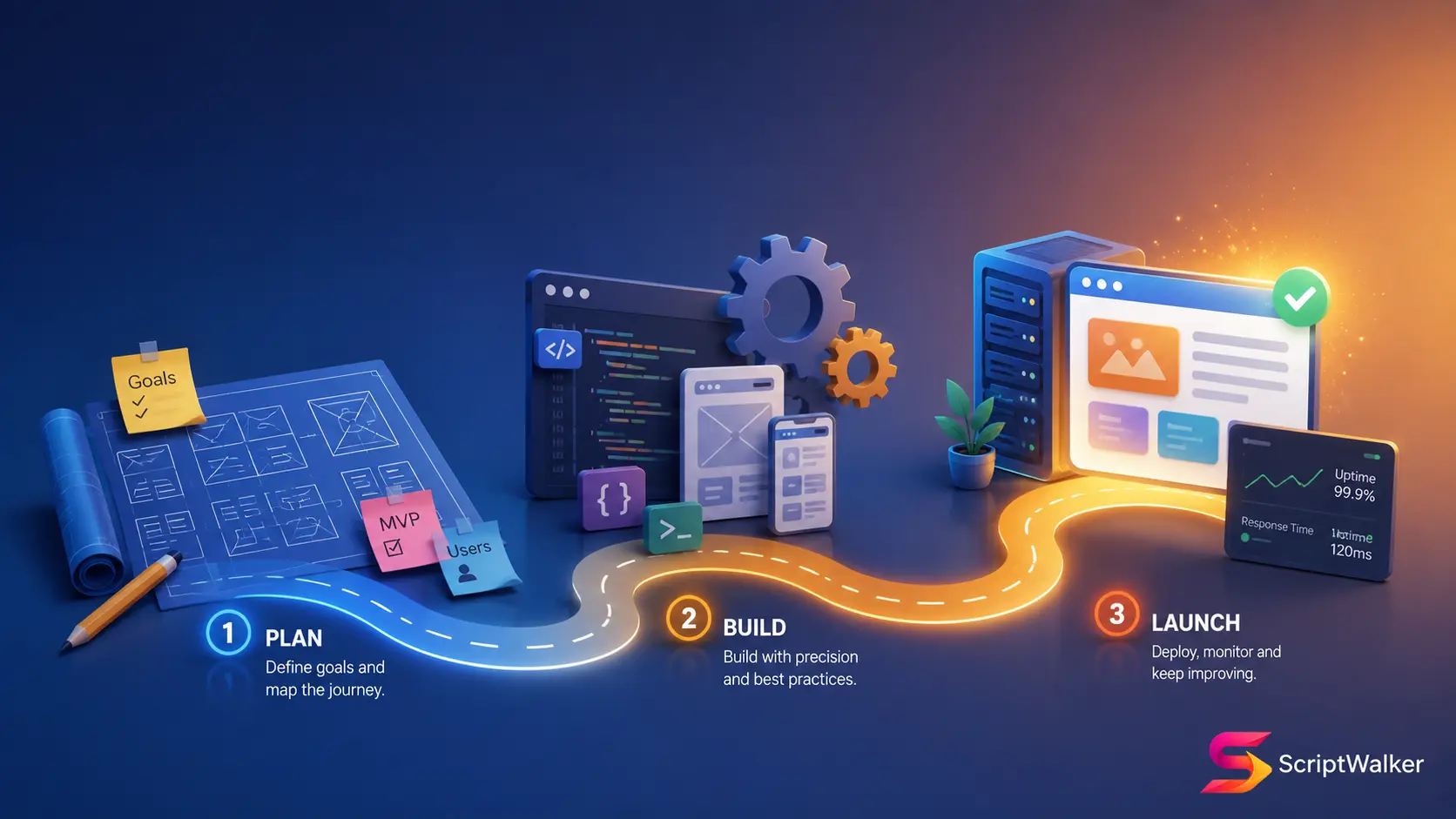
The first thing many clients say is, I want to build an app or website, how much, how long? We usually do not quote on the spot, because before requirements are clear, any number is a guess. Whether a project runs over time, over budget, or ends with this is not what I pictured is, in our experience, about 70% decided before the first line of code. So we split our service into three clear phases, each with deliverables a client can actually read.


1. Planning and Requirements


We translate what you want into what the system must actually do. That means clarifying the target users, the core flows, the necessary features, and the features we will deliberately not build this round (defining what is out of scope is often more valuable than listing what is in). The deliverables are a requirements document, a flow diagram, and an explicit scope list. The value of this phase is turning vague expectations into black-and-white agreement so both sides are aligned before any work begins, heading off the later I assumed that was included disputes.


2. Build


We move into design and development, interface and data structure first, then implementing feature modules step by step, giving the client working versions for staged sign-off rather than holding everything until the last minute. Websites, management information systems (MIS) and apps each have different priorities: a website cares about front-end experience and SEO fundamentals; an MIS cares about permissions, workflow and data correctness; an app must face store review and multi-device compatibility. The hosting environment (server, database, domain, certificates) is planned in this phase too, not scrambled together right before launch.


3. Launch and Operations


Going live is not the finish line, it is the start of operations. We help with deployment, backups, monitoring and baseline security hardening, and fold ongoing updates, patching and expansion into a maintenance plan.


4. Things We Proactively Flag


One, write data ownership and backups into the contract to avoid migration headaches later. Two, plan how content and data will be maintained, a delivered system is alive and needs someone able to keep updating it. Three, do not cut the most expensive things later to save small money during planning, permission design and data structure cost far more to redo than to get right the first time. Our role is to remove risk in the places you cannot see it, so that going live becomes predictable.