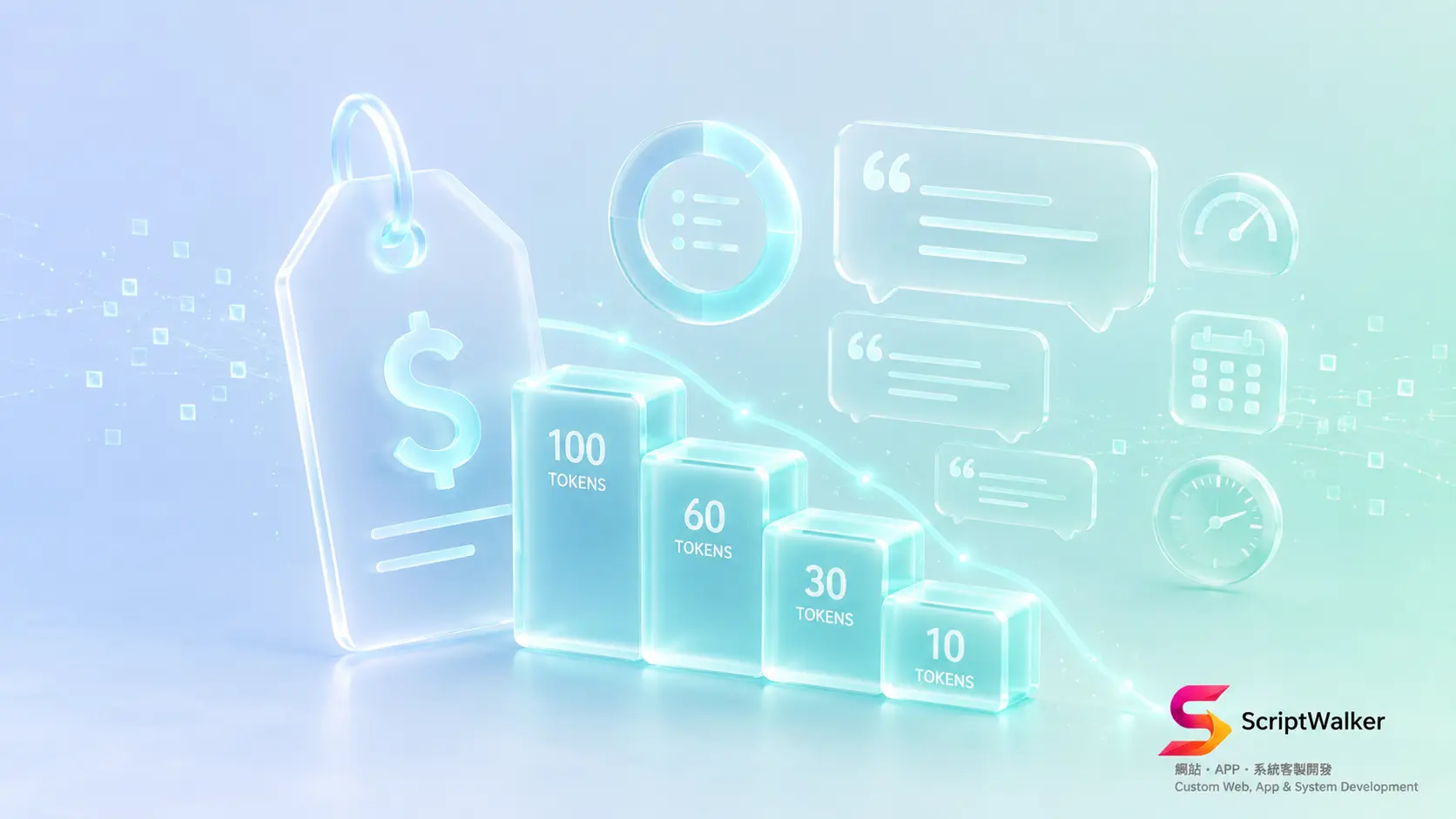
On 21 August 2026, OpenAI cut API pricing for its frontier reasoning model GPT-5.6 Sol: input from $5 to $4 per million tokens (−20%), output from $30 to $20 (−33%). The official pricing page reflects the change and flags it as promotional, holding at least through 21 November. The size of the cut isn't dramatic. The relative position is. A model that was the most expensive thing in OpenAI's own lineup the previous day now sits below Anthropic's Claude Opus 5 ($5 / $25) on both input and output.
This didn't happen in isolation. Over twelve months, frontier pricing has slid from "set once at launch, hold for six months" to "quarterly promo, adjusted against whoever moved last." On 30 July, OpenAI pushed lightweight GPT-5.6 Luna down to $0.20 / $1.20, nailing the floor for mainstream APIs at twenty cents per million input tokens. The mid tier is more crowded still: Claude Sonnet 5, GPT-5.6 Terra and Gemini 3.1 Pro all sit at exactly $2 input. Meanwhile enterprise LLM API spend has reached $8.4B, tracking toward $15B by year end. The pool grows while unit prices fall, which means vendors are trading price for share of usage. In that structure the most expensive tier is the easiest to discount: smallest absolute volume, largest headline.
The comparison set is clear. Anthropic holds roughly 40% of enterprise LLM API spend against OpenAI's 27%, and in AI coding — the most token-hungry workload in the category — the gap widens to 54% versus 21%. Google runs a third strategy: Gemini 3 Pro at $2 / $12, taking the middle by being good enough at half the price. Together the three show a category that is neither purely expanding nor consolidating but stratifying into three shelves — a $0.20 commodity shelf, a $2 main-battle shelf, and a $4–5 frontier shelf that the middle is dragging down.
Does this hit small and mid-sized businesses directly? Barely — the cut excludes Pro, Plus and Business subscriptions. Indirectly it matters a lot. The underlying cost of every AEO/GEO monitoring tool is tokens, and falling token prices squeeze the premium out of a $500-a-month AI visibility dashboard. This article is about using the 90-day window to build that subscription away.
What Actually Changed, With Numbers
The scope is unusually specific: direct API calls plus credit redemption on ChatGPT Work and Codex. Pro, Plus and Business subscription fees and allowances are untouched. This is targeted relief for pay-as-you-go developers, not an across-the-board cut.
| Model | Input (USD / 1M tokens) | Output (USD / 1M tokens) | Position |
|---|---|---|---|
| GPT-5.6 Sol (after 8/21) | 4.00 | 20.00 | Frontier reasoning, promo to 11/21 |
| GPT-5.6 Sol (before 8/21) | 5.00 | 30.00 | — |
| Claude Opus 5 | 5.00 | 25.00 | Frontier reasoning / coding |
| Gemini 3 Pro (≤200K) | 2.00 | 12.00 | Mid-tier main battle |
| GPT-5.6 Luna | 0.20 | 1.20 | Bulk parsing / classification |
Who benefits: teams running long reasoning chains where output dominates the bill. An agent workflow consuming 50M output tokens a month goes from roughly $1,500 to $1,000. Who doesn't: anyone on a ChatGPT subscription, and any team already standardized on Terra or Luna. One piece of noise to filter out — a "Sol 50% off" banner circulated on OpenRouter the same week. That is a marketplace promotion, not an official rate change. Don't model both as if they stack.
Immediate Actions for Three Audiences
Brand owners and SMB operators
- Itemize what you pay for AI visibility. Is the vendor selling raw data, or interpretation on top of it?
- Put 21 November on the table in any renewal negotiation. Your vendor's input costs are falling during this window.
- Don't respond to cheaper tokens by mass-producing AI content. Google finished rolling out the August 2026 Spam Update between 18 and 21 August, and its spam policies explicitly cover attempts to manipulate generative results.
Marketing and SEO practitioners
- Build a list of 150–300 brand-relevant prompts covering category, comparison, problem and alternative-to terms. The list is the asset. The tool is not.
- Run it weekly and record four things: brand appearance, cited domains, answer sentiment, delta against last week.
- Cross-reference cited domains against your GA4 referral and direct traffic. A meaningful share of AI-sourced visitors lands in direct, so referral-only reporting understates the channel badly.
Developers and agencies
- Split the parsing layer from the reasoning layer. Fetch and structure with a $0.20-class model; call Sol only for sentiment judgement or written recommendations.
- Route non-urgent jobs through the Batch API, which typically halves the bill again.
- Keep promotional rates in a config file, not hardcoded. On 22 November you want a one-line provider switch.
AI Visibility Monitoring Tools Compared
| Tool | Position | Rough price | Best for |
|---|---|---|---|
| Profound | Enterprise AI visibility platform; $96M Series C in Feb 2026, valuation past $1B | Annual contracts, typically four figures/month | Mid-to-large firms with a brand team |
| Peec AI | European AEO monitoring; $21M Series A in 2026 | Mid-tier monthly | Brands tracking several language markets |
| Otterly.AI | Lightweight AI search rank tracking | Entry-level friendly | Single brand, single market |
| BrandRank.AI | Brand reputation crossed with AI citation monitoring; $4.2M raised | Mid-tier monthly | Brands where tone and reputation risk matter |
| Self-hosted pipeline | Prompt list + scheduled fetch + cheap-model parsing | $20–40/month in compute | Anyone with one engineer or an agency |
The four SaaS options differ mainly in how many answer engines they cover, how long they retain history, and whether they reverse cited domains into competitive intelligence. The spread is wide enough that you should answer one question first: do you want the data, or someone to read it for you?
What They Won't Tell You
One: this is a promotion, not a price cut. The wording is "at least through 21 November," with no commitment past that. Building a twelve-month model on promotional rates schedules an unknown 25–50% cost jump into next year's Q1.
Two: a 33% unit-price cut doesn't produce a 33% smaller bill. Sol is a reasoning model, and thinking tokens bill on the output side. Real workloads routinely emit three to five times the output volume people estimate, and cheaper tokens invite the very behaviour — letting the model think longer — that erases the saving.
Three: for GEO monitoring, this cut is close to irrelevant. The token hog in a monitoring pipeline is parsing and classification, and that layer should already run on a $0.20 model. What actually eroded the AEO SaaS moat was the 30 July Luna repricing. This week's headline is mostly a flare.
The No-SaaS-Subscription Alternative
- Week 1: Build a spreadsheet of 150–300 prompts with columns for prompt, intent class, target page, competitor set.
- Week 2: Write a scheduled script that runs the list weekly against ChatGPT, Perplexity, Google AI Mode and Copilot, storing raw answers and citation links verbatim in SQLite or Postgres.
- Week 3: Batch-parse with a cheap model into four fields: brand mentioned, cited domain list, sentiment score, answer length.
- Week 4: Point Metabase or Looker Studio at the table. Two charts are enough — weekly mention-rate change, and top 20 cited domains.
Cost math: 200 prompts × 4 engines × weekly is 800 fetches per week. Parsing on Luna ($0.20 / $1.20) lands in single-digit dollars monthly; add proxies and hosting and you're at $20–40. Write the compliance boundary into the spec: prefer official APIs and data exports, and where you simulate user queries, control frequency, identify your user agent honestly, never bypass paywalls.
FAQ
Should I migrate from Claude Opus 5 to GPT-5.6 Sol now that Sol is cheaper?
Price alone will lead you wrong. Sol is cheaper for 90 days, and Opus 5 still holds more than half of enterprise API spend in AI coding, which tells you migration cost and quality differences are real. Abstract the provider into config, benchmark on your own real work, then decide.
What happens to Sol's promotional pricing after 21 November 2026?
OpenAI has only committed to "at least through 21 November." The defensible budgeting assumption is a return to $5 / $30, with November onward flagged as a high-risk line item. An extension would be upside, not the base case.
Will cheaper tokens lower AEO/GEO subscription prices?
Not in the short run. SaaS pricing anchors to the labour you avoid, not the compute it consumes, so cost reductions land in gross margin before list price. What pushes prices down is substitution getting easier — a self-hosted pipeline one engineer can ship in a month.
Does an SMB really need AI visibility monitoring right now?
If your customers ask an AI "what are my options" before they buy, yes. The test is cheap: take the ten prompts you most want to win, ask ChatGPT, and if your name is missing from eight of them, this outranks writing another twenty blog posts.
My Take
The consensus reading is "AI got cheaper, everybody wins." I read it the other way. What this cut leaks is that pricing power at the frontier is evaporating. When the most expensive model in a lineup can lose 33% of its output price on a Friday, its differentiation no longer holds the number — and when pricing power goes, the first casualties downstream aren't the model labs. They're the application-layer companies reselling marked-up tokens.
Concrete prediction: within 18 months, a substantial share of AI visibility tools charging $500+ per month whose core value is "we ask the AI for you and chart it" will be compressed below $99, or absorbed as a module inside incumbent SEO platforms. Two kinds survive — those holding cross-brand historical data (data as moat), and those that walked into advisory work (people as moat).
For an agency like ScriptWalker, the opportunity sits in the middle: don't sell a subscription, sell a build plus a retainer. Package the prompt list, fetch scheduler, parsing pipeline and dashboard as a deliverable project, hand the client full ownership of data and code, and bill monthly for maintenance and interpretation. That's more durable than competing on UI, and the better the client understands the cost structure, the easier the pitch gets.
- Email: [email protected]
- Phone: 0916-224-047
- LINE: @ufv9089p
Self-Check Checklist
- ☐ Confirmed Sol's share of your API bill and your output-token share
- ☐ Provider and price moved into config, not hardcoded
- ☐ 2026-11-21 flagged as a price risk in the budget
- ☐ Brand prompt list of 150+ questions built
- ☐ AI citation data cross-referenced against GA4 direct traffic
Sources
Primary
- OpenAI API Pricing (official)
- OpenAI GPT-5.6 Sol model documentation
- OpenAI: GPT-5.6 announcement
- Anthropic Claude Platform pricing documentation
Third-party
- OpenAI cuts developer pricing for frontier GPT-5.6 Sol model by more than 20%
- OpenAI Cuts GPT-5.6 Sol API Prices by Up to 33% Through November 21 (WinBuzzer, 2026-08-23)
- LLM API pricing comparison in 2026 (CloudZero)
- OpenAI vs Anthropic Market Share 2026: Enterprise API
- The GPT-5.6 Sol "50% off" was an OpenRouter promo, not an official price change