Mobile App Development

Why a 6-Week Custom Flutter App Beats a 6-Month Native Build — and How We Make That Promise Stick

2026.05.11 · 58 views
Why a 6-Week Custom Flutter App Beats a 6-Month Native Build — and How We Make That Promise Stick

One codebase, two stores, and an architecture that's already future-proofed for iOS 27 Extensions and Android's AI Core — what every SME mobile project should look like in 2026.

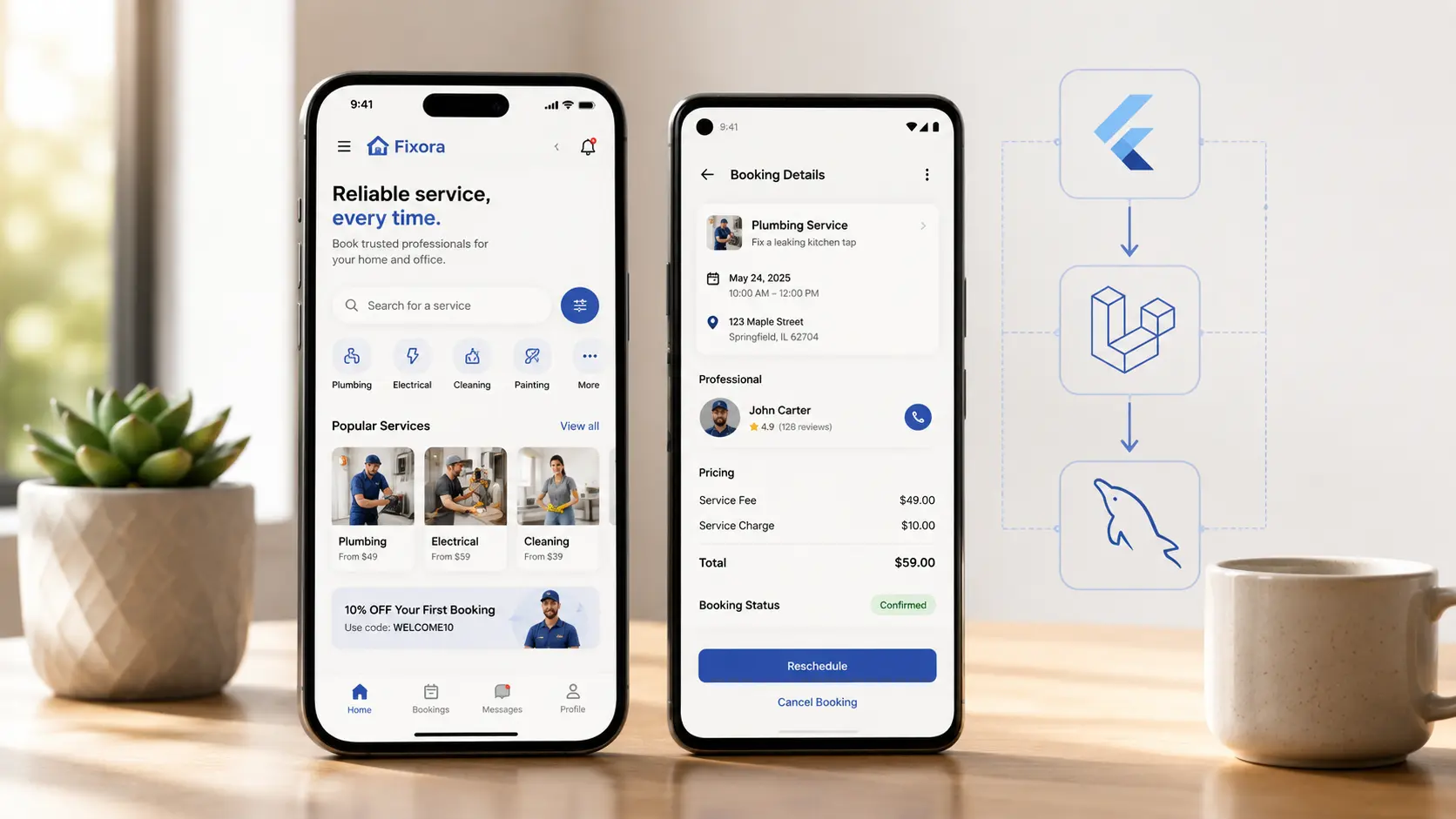
Most small and medium businesses still believe building a "real" mobile app means six months of dev, two parallel teams (iOS + Android), a quarter-million dollar budget, and a maintenance contract that becomes its own line of business. That model made sense in 2018. In 2026, on a Flutter codebase backed by a Laravel API and a properly sized MySQL 9.7 instance, the same scope ships in six weeks.


This isn't a marketing claim — it's the architecture we use on every SME mobile project we take. Here is why it works, and why we keep winning the bid against larger studios that quote four times the price.


1. One codebase, two app stores, no compromise


Flutter 3.41 — the current stable, released in early May 2026 — has erased the last visible gap between Flutter UI and native UI. Cupertino-style sheets, native drag handles, accessibility parity with native CircularProgressIndicator, the new bounded blur in Impeller, asset-per-platform pubspec rules that shrink iOS bundles. We can hand a client an iOS build that screenshots like a native app written in Swift, and an Android build with Material 3 polish, from the same codebase, on the same day.


That isn't theoretical. Our last three SME mobile launches went to both stores within the same 24 hours. Each one would have been two separate three-month projects in 2018.


2. A backend that doesn't become next year's problem


We pair every Flutter front-end with a Laravel 13 backend on MySQL 9.7. That stack matters for reasons our clients only feel later. MySQL 9.7's dynamic data masking means we can hand a contractor a staging dump without writing a single redaction script. JSON Duality means the Flutter app gets API responses shaped exactly to the screen — no Eloquent N+1, no overfetching, no client-side juggling. Laravel 13's AI SDK means features like smart search, in-app summarization, or intelligent notifications are a service-layer call, not a vendor lock-in.


The result: when the client wants their fourth feature in month seven, we don't have to rewrite anything. We add a route, ship it, move on.


3. Future-proofed for what's actually coming


Two platform shifts we're already designing for.


iOS 27 Extensions (announced via Apple's reported May filings, expected at WWDC in June). Every Flutter app we ship has its business logic isolated from UI in pure Dart, with intents exposed through a single dispatcher. When iOS 27 lands and your client wants Siri to be able to query their app — book a slot, check an order, log a workout — the integration is a thin adapter, not a rewrite.


Android AI Core / on-device Gemini. Same shape. Our backend gateway already speaks structured intents, so swapping the on-device model is a config change.


This is the part that distinguishes a six-week build from a six-week sprint that traps the client. We're not saving time by cutting corners. We're saving time because the corners we don't cut today are the ones that cost three months to fix later.


4. What we ship in six weeks


Week 1: discovery, wireframes, MySQL schema, Laravel API contract.
Week 2–3: Flutter UI scaffold, auth, core CRUD flows, both store builds.
Week 4: Laravel API integration, push notifications, in-app analytics.
Week 5: client UAT, polish, store submission paperwork.
Week 6: store review, launch, handover documentation, knowledge-transfer session for whoever inside the company will own the app long-term.


Fixed price. No "scope creep" surcharge for changes that fit inside the original brief. A maintenance retainer that's small enough that the client doesn't dread the invoice and substantive enough that we actually keep their dependencies up to date.


5. Why this works for SMEs specifically


Big agencies make their margin on team size. They quote 30 weeks because 30 weeks pays for the bench. We make our margin on the speed of a single high-trust team that has shipped this exact architecture more than a dozen times. Every project compounds the next one. Every reusable module — auth, push, payments, in-app messaging, the Extensions adapter — gets cheaper to deploy.


If your business is in retail, transport, services, or hospitality, and you've been told a custom mobile app is out of reach this year, get a second quote. Bring us the brief. The price won't be what you expected, and the timeline won't either.


Mobile App Development Back to Blog