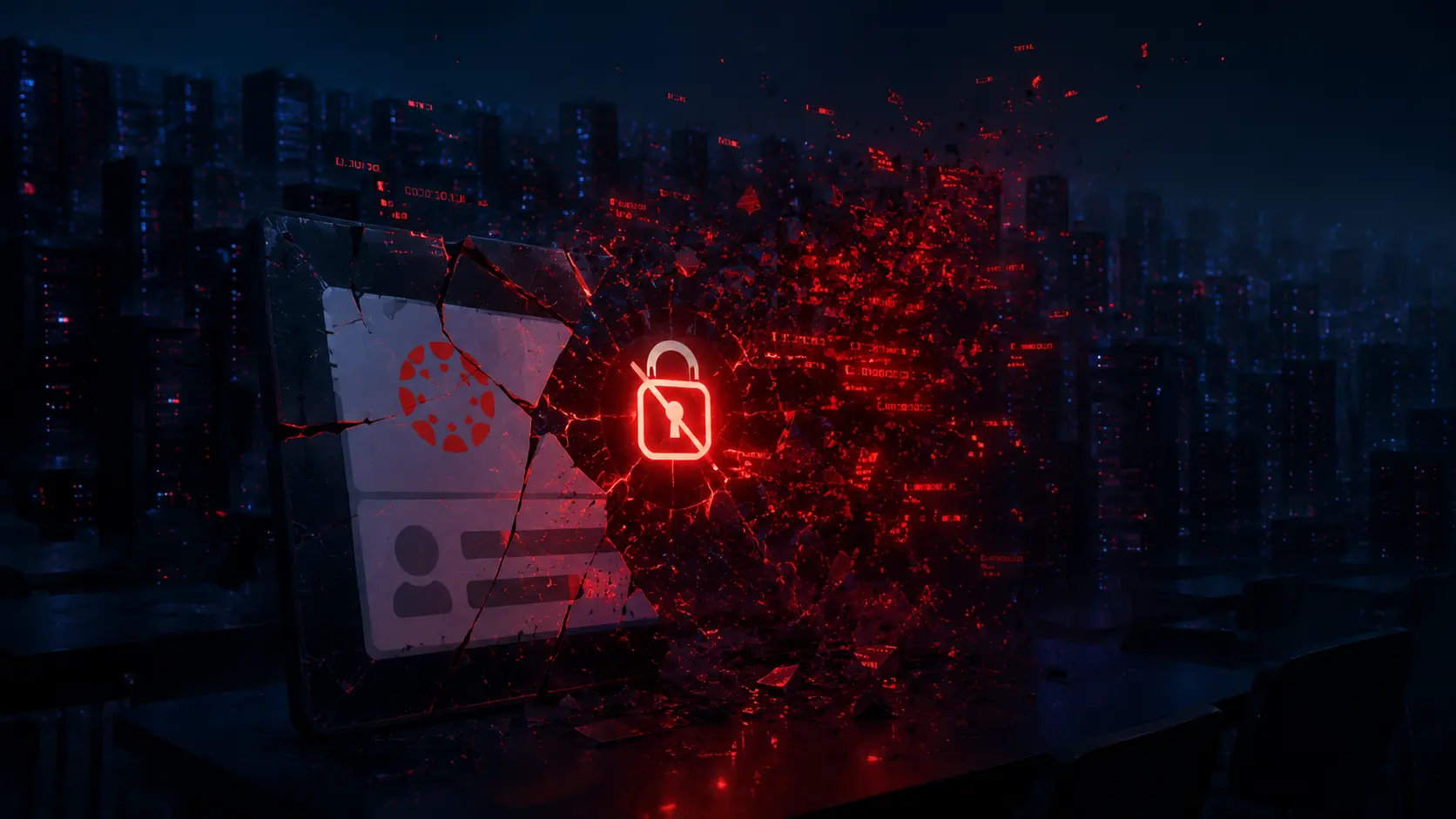
May's biggest security event was not in finance or government — it was in education. Canvas LMS, Instructure's flagship and one of the most widely deployed learning management systems on the planet, got breached twice in ten days. On May 1, attackers attributed to ShinyHunters exfiltrated 3.65TB of data spanning 8,809 universities and government education ministries, affecting ~275 million users — including names, emails, student IDs, and the most sensitive of all: private messages between students and teachers. After Instructure announced remediation, attackers returned on May 7 and replaced the Canvas login page with a ransom note. On May 11, Instructure stated they had reached an agreement with the threat actor and claimed the data was destroyed.
The full root cause has not been published, but combined with the parallel ShinyHunters attack on Cushman & Wakefield (500,000+ Salesforce records) the most likely entry was stolen third-party OAuth tokens and API keys, paired with over-permissive IAM roles that allowed a single credential to dump the multi-tenant database.
For teams running Laravel + MySQL + Nginx stacks, there are four immediately actionable lessons:
1. OAuth Tokens Must Always Have Scope and TTL
Many Laravel apps grant third-party integrations "full read/write" scope with non-expiring tokens for the sake of developer convenience. Sanctum and Passport both support token abilities and expires_at — turn them on, and run a daily cron that revokes anything past age.
2. MySQL Queries Need Row-Level and Tenant-Level Guards
Laravel Global Scopes are the right tool. Force a tenant_id filter onto every Eloquent query so that any controller that "forgot to filter" gets blocked at the ORM layer.
3. Nginx Must Enforce API Rate Limits and Geo-fencing
limit_req_zone + limit_req is the baseline. For admin dashboards and data-export endpoints, add allow/deny lists, or use ngx_http_geoip2_module to restrict unexpected regions.
4. Audit Logs Must Be Append-Only
Write high-sensitivity operations (data exports, permission changes, login failures past threshold) into a dedicated audit_logs table. Combine a Laravel Observer with a database-level BEFORE UPDATE/DELETE trigger that rejects all modification. Forensic recovery often comes down to whether this single table is intact.
The scariest part of the Canvas incident is not attacker skill — it is the multi-tenant blast radius: "one SaaS gets popped, thousands of institutions and a quarter-billion users fall over." SaaS is high-leverage by design, but its attack surface is multi-tenant-leveraged too. One leaked admin token equals tens of thousands of compromised accounts.
My Take
This incident is a wake-up call for every outsourcer who is currently pitching "let us centralize your client data into one system." The old sales line was "centralized = cheaper to manage." After 2026, the line needs to become: "centralized + cheaper to manage + data-compartmentalized." Technically that means MySQL data is tenant-isolated at schema or at minimum row level, encryption keys are per-tenant, OAuth tokens carry ability scopes, and audit logs are append-only. None of this is novel — but it is what separates you from the cheap one-shot agency. Clients don't pay you because you code fast. They pay 2x because you ship security deliverables.
Sources
- Instructure Reaches Ransom Agreement with ShinyHunters to Stop 3.65TB Canvas Leak — The Hacker News
- 2026 Canvas Security Incident — Wikipedia
- Millions of Students' Personal Data Stolen in Major Education Breach — Malwarebytes
- May 2026 Data Breaches: Major Incidents — SharkStriker
- Practical Complete Guide: Laravel Security Design — Greeden Blog