AI / SEO

Cloudflare Just Made HTTP 402 a Real Status Code — and AI Crawlers Will Be the First to Pay

2026.05.13 · 60 views
Cloudflare Just Made HTTP 402 a Real Status Code — and AI Crawlers Will Be the First to Pay

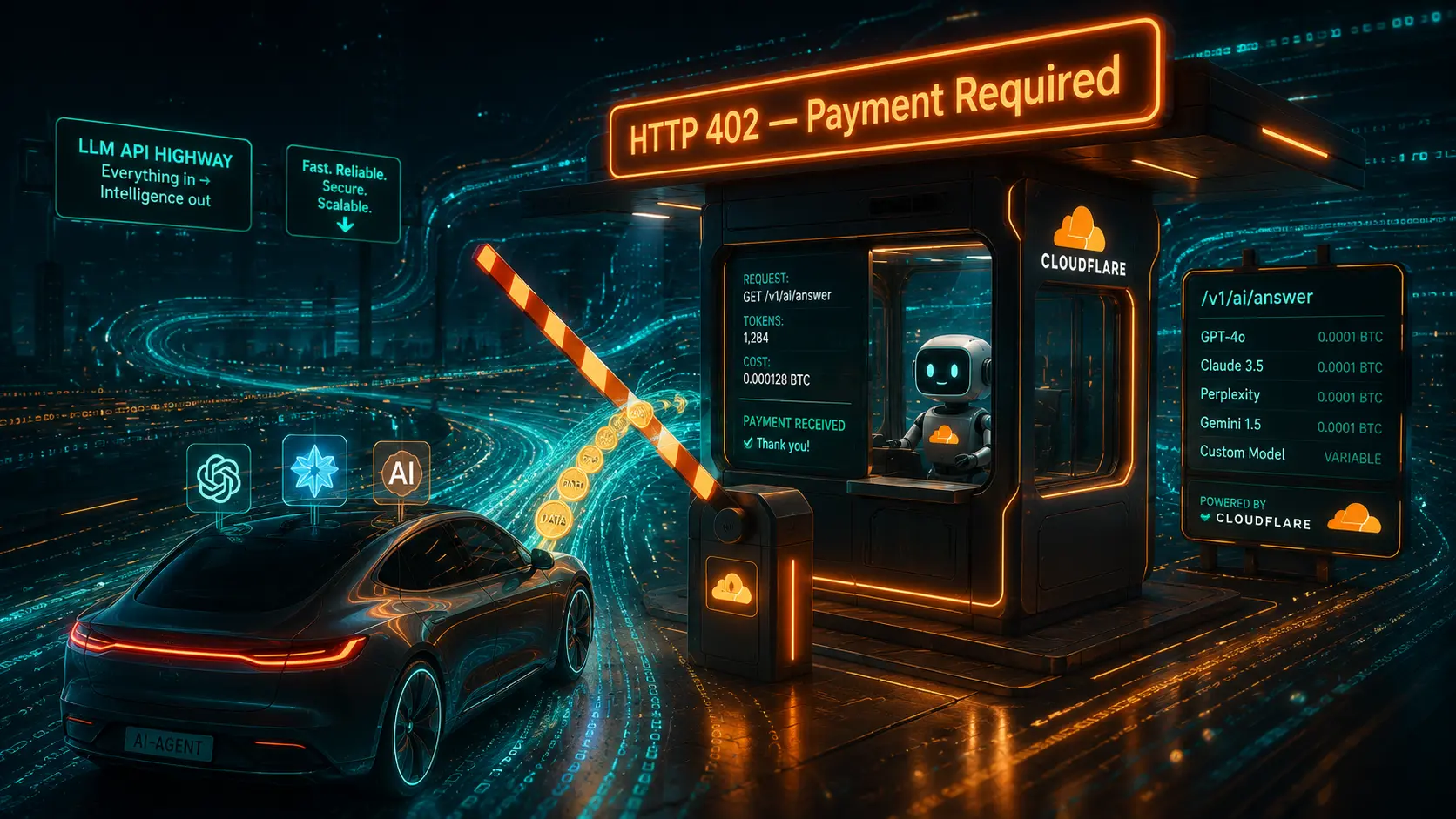
"Pay Per Crawl" plus AI Crawl Control flips the default of the open web from "anyone can read" to "AI bots check the meter," and gives content owners a programmatic toll booth for the first time.

For two years the entire AI ecosystem ran on a polite fiction: that robots.txt was a real boundary and that AI crawlers respected publishers' wishes. The Cloudflare–Reddit–OpenAI legal noise of 2024 already showed that fiction was paper-thin. This week the fiction is officially over.


Cloudflare's Pay Per Crawl feature, in closed beta since mid-2025, just turned on customizable HTTP 402 "Payment Required" responses for every paid Cloudflare customer. Combined with the new AI Crawl Control dashboard and the Cloudflare–GoDaddy partnership announced in April, the open web now has, for the first time at infrastructure scale, a programmable toll booth aimed specifically at AI bots.


1. What actually shipped


Three things turned on at the same time. First, Cloudflare made the 402 status code a first-class response — every paid customer can now configure individual bots to be denied with a custom message and a payment-required header. Second, AI Crawl Control exposes per-bot, per-URL allowlist / denylist / price rules in a single dashboard, with logging of who tried to crawl what. Third, Pay Per Crawl billing — both crawler operator and content owner authenticate, and a billing event fires every time the crawler makes an authenticated request and gets a 200-level response.


The pricing protocol is symmetric: the crawler advertises a maximum it is willing to pay; the content owner advertises a price. If the crawler's max is below the configured price, it gets a 402. If the crawler's max is at or above, it pays the configured price (not its max — Cloudflare's pricing is always the floor that wins).


2. Why this is different from "block bots in robots.txt"


robots.txt is a request. A 402 with payment intent is a transaction. The legal posture changes immediately: an AI company that ignores a 402 is not "violating netiquette," it is bypassing a paywall. That has actual case law behind it in most jurisdictions, including under the U.S. Computer Fraud and Abuse Act. For publishers who have spent two years asking "how do we make OpenAI pay for what they trained on," the answer is no longer "send a takedown letter" — it is "set a price and let the crawler decide whether to authenticate."


3. What this means for AEO/GEO strategy


Three months ago the smart strategy was to flood AI answer engines with citation-friendly, well-structured content (AEO), and to optimize for being included in the AI's generated answer (GEO). That strategy is still right, but it now has a parameter you didn't have before: price.


If you are a niche-authority site (medical, legal, financial, B2B technical), you suddenly have a real revenue line item: charge AI crawlers at the rate your content's downstream value justifies. If you are a generic content site, you almost certainly want to charge zero — being free is your distribution edge — but you still want to be inside Pay Per Crawl so the AI bots authenticate and you can see them. Authenticated crawlers leave a usable log; "Direct" GA4 traffic does not.


4. What developers should build this quarter


Three concrete jobs land in the engineering backlog. First, segment your URL tree: marketing pages = free for AI, premium / proprietary content = priced. Second, return a sane 402 body — most current AI clients will read the body and may surface "this content is gated" to the user; make sure your body explains how to authorize. Third, log every 402 hit in your application database (slug, bot, timestamp, offered max). Within a quarter you will know exactly which AI crawlers are willing to pay for your content and at what price — that is a market signal nobody had access to before.


5. Second-order effects


Two will matter inside 12 months. First, AI answer engines will start citing only the sources they can afford to crawl, which means small premium publishers will get cited more, not less, because they will be one of the few willing to license at scale. Second, expect a new "AI middleman" tier — companies that aggregate paid licenses and resell them to smaller AI products that cannot negotiate publisher-by-publisher. This is the same shape as how stock photo licensing eventually consolidated.


My Take


The narrative everyone is using is "publishers vs AI." That misses the actual move. The interesting thing about Pay Per Crawl is not that publishers can now charge — it is that AI companies, for the first time, have a clean, machine-readable way to pay. Right now their only options are scrape and apologize, scrape and litigate, or sign expensive bespoke deals. A 402-with-payment-intent gives them a route to compliance that costs less in legal fees than continuing to fight. The companies that quietly opt in to paying tiny per-request fees in 2026 will, in 2027, be the ones with the cleanest legal story when the first big copyright ruling lands. Cloudflare didn't just give publishers a toll booth — they gave the AI industry an off-ramp.


Sources