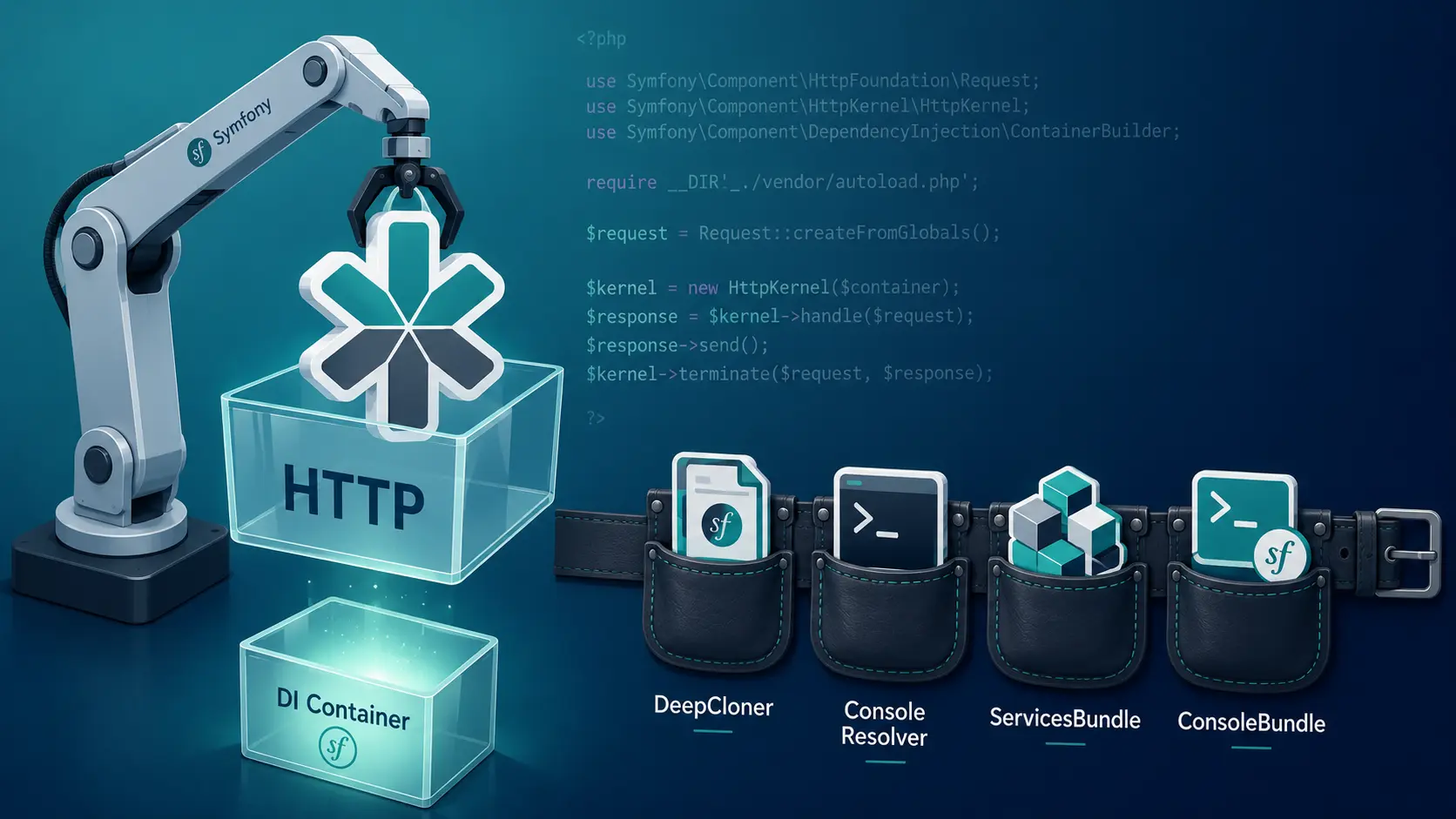
5 月 6 日,Symfony 8.1.0-BETA1 正式釋出,預計月底發行 GA 版。這個版本在台灣 PHP 圈被討論的不多,但對接案工作室與內部後端團隊來說,這是 Symfony 自從 5.x 引入 Component 化以後最重要的一次架構鬆綁。
最大的改變是 HTTP-Less Symfony Applications。Symfony 8.1 把 Kernel 與 Bundle 基礎設施從 HttpKernel 抽出來,搬到 DependencyInjection 元件裡,並推出全新的 KernelInterface,只暴露容器相關 API。換句話說,你現在可以做出一個「沒有 HTTP」的 Symfony 應用:純 CLI 工具、長駐型 worker、資料 ETL 管線、機器學習特徵工程腳本——全部都能享用 Symfony 完整的 DI、設定檔、Bundle 系統與服務生命週期,但不必載入 HttpKernel 那一整包路由、防火牆、回應產生器。對外包工作室來說,這個改變的商業價值是:你可以把同一份骨架,賣給「網站客戶」也賣給「資料管線客戶」,後者的程式碼量會少 30%–40%,部署成像也會明顯變小。
一、DeepCloner——終於有原生深拷貝
Symfony 8.1 內建一支高效能、低記憶體的深拷貝工具,能處理 PHP 的複雜物件圖(包含循環參照、SplObjectStorage、迭代器)。為什麼這對 PHP 工作很重要?因為過去十年,凡是寫過電商、ERP、客製後台的人,幾乎都自己刻過某種版本的「複製訂單」「複製估價單」「克隆產品變體」。clone $entity 永遠不夠用——關聯實體、值物件、Money 物件、自訂迭代器,最後總是寫一堆遞迴 __clone()。DeepCloner 讓這件事一次到位,而且效能比常見的 myclabs/deep-copy 快、吃記憶體少,這對處理大批批次(例如月底結算複製五千張帳單做 What-If 分析)的 PHP 工作很關鍵。
二、Console Argument Resolver 與多命令打包
Symfony 8.1 為 console 命令加上參數解析器,CLI 參數與選項會自動轉成型別化的值與物件——你終於不用每寫一支命令就 $input->getArgument('id'); $entity = $repo->find($id); 重複個三行。這聽起來像微小改善,但凡是用 Symfony 寫過維運腳本的人都知道,console 命令是開發者每天面對最多次的 PHP 程式碼,這次的更新等於把 Controller 那層的開發體驗下放到 CLI。此外 Symfony 8.1 允許你把多個相關的 console 命令寫在同一個 class,共用建構子相依——對工作室特別有用:你可以把「order:export」「order:reconcile」「order:notify」三隻指令寫進同一個 OrderConsoleCommands class,共用 OrderRepository、Mailer、Logger,維護成本直接降一半。
三、ServicesBundle 與 ConsoleBundle
這是 Symfony 把 FrameworkBundle 拆小的第一步。未來幾個版本,FrameworkBundle 會持續被切成小塊,可獨立安裝。對工作室是好消息,因為很多客戶其實只需要 DI + Console,他們的部署封裝會更乾淨。
四、搭配 PHP 8.5
PHP 8.5 也在 5/7 上線了 8.5.6 安全更新,包含 Property Hooks、Asymmetric Visibility、Pipe Operator (|>)、URI 擴充。Symfony 8.0.7 在 PHP 8.5.4 上實測比 PHP 8.4 快 3%–5%,特別是在資料庫操作與 API 處理。換句話說,PHP 工作室現在升級到 Symfony 8.1 + PHP 8.5 是一個值得評估的雙重利多。
我的觀點
過去三年,PHP 框架的故事都是「貼著 HTTP 跑得更快」——Octane、FrankenPHP、RoadRunner、Bref。但 2026 年的需求已經變成「同一份程式碼要會跑 HTTP,也要會跑 worker、跑 cron、跑 AI agent 工具入口、跑 ETL」。Symfony 8.1 的 HTTP-Less Kernel 把這件事變成框架自帶能力,等於告訴大家:未來十年的 PHP 應用會分成兩半——「對外的 HTTP 表面」與「對內的計算管線」,而它們可以、也應該共用同一個 DI 容器與設定檔。
對外包工作室是非常實際的好處:你可以把一個客戶的「網站 + 後台 + 排程任務 + AI 助理工具」全部部署成一份程式碼、一份設定、一份 CI/CD pipeline,但根據環境變數啟動不同的 Kernel。這是過去要靠 monorepo + 多個 Composer 套件才能達成的事,Symfony 8.1 之後變成預設能力。如果你的客戶現在還跑在 Symfony 5.4 或 6.4,5/20 之後的 Symfony 8.1 GA 是一個很好的升級對話起點——不只是「你該升級了」,而是「升級之後,你的後端可以做什麼今天做不到的事」。
資料來源
- Symfony 8.1.0-BETA1 released — Symfony Blog
- New in Symfony 8.1: HTTP-Less Symfony Applications — Symfony Blog
- A Week of Symfony #1009 (April 27 – May 3, 2026)
- Symfony 8.1, the big CLI update — DEV Community
- Doubting PHP 8.5 for Symfony? Real performance gains — 4bisinnovations