Web Development

WordPress 7.0 Lands May 20: The First CMS to Treat AI as a First-Class Citizen

2026.05.07 · 57 views
WordPress 7.0 Lands May 20: The First CMS to Treat AI as a First-Class Citizen

What the new Web Client AI API, real-time collaboration, and DataViews mean for PHP developers and the millions of WordPress sites about to upgrade

There is a date the entire WordPress ecosystem has circled in red on its calendar: May 20, 2026. That is when WordPress 7.0 — pushed back from April 9 to give the architecture team breathing room — is now expected to land. For a platform that quietly runs over 40% of the public web, version 7.0 is the most consequential release since Gutenberg shipped in 5.0. The headline feature is not a new block. It is that WordPress core, for the first time in its 23-year history, ships with a native AI client API.


Let's pull on each thread, because the implications for PHP developers, agencies, and SaaS plugin authors are enormous.


1. The Web Client AI API, explained


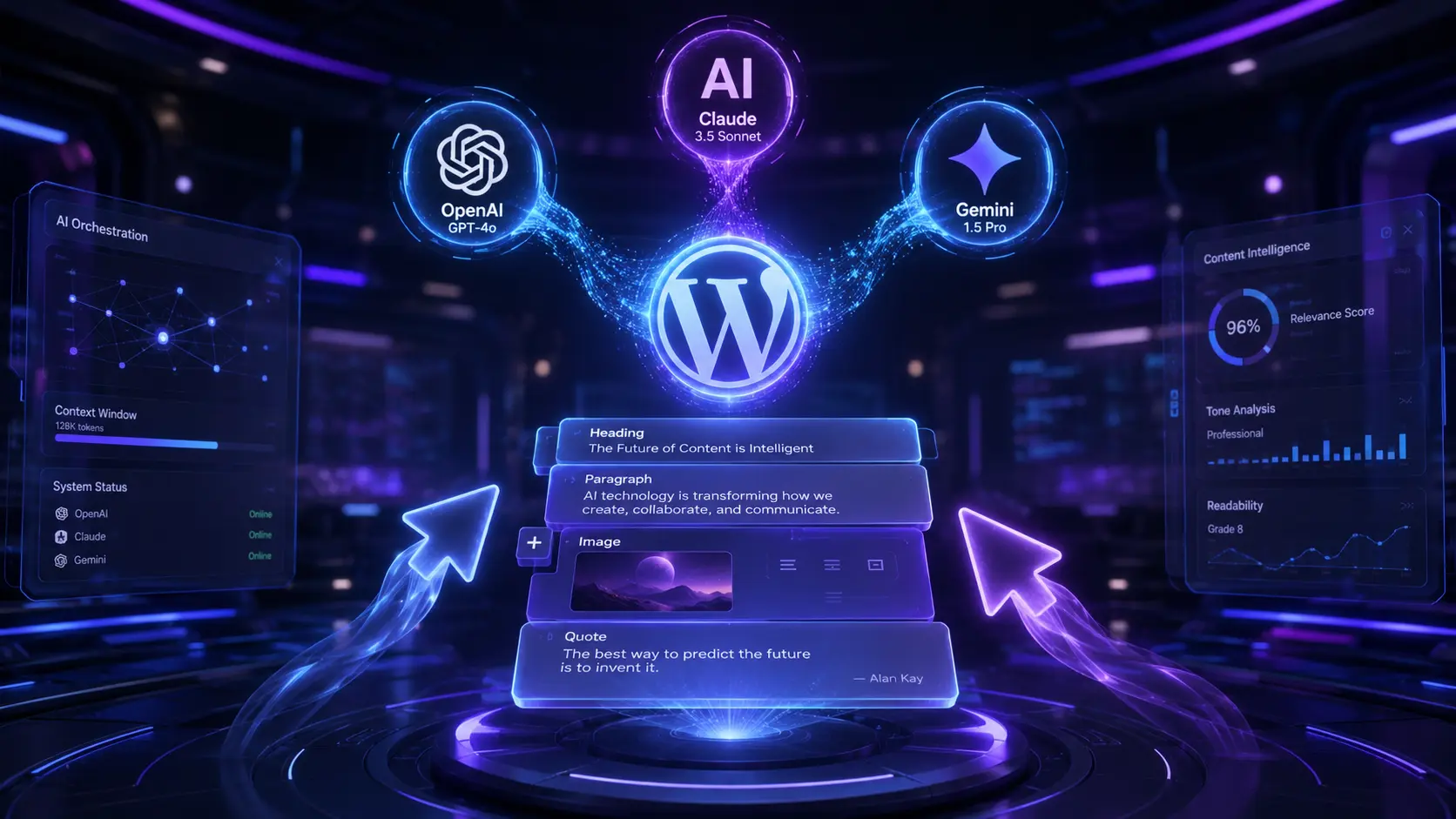
WordPress 7.0 introduces a provider-agnostic AI client at the framework level. A theme or plugin can call into a single, standardized API; the actual model — OpenAI, Anthropic, Google, Mistral, your private Llama instance — is registered through a new "Connectors" admin screen. The site owner provides the API key once. Every plugin downstream can then prompt without re-implementing transport, retries, streaming, or rate limiting.


For PHP developers this is the most important architectural decision since the REST API. Until now, every plugin that wanted to talk to a model had to bring its own HTTP client, its own credential storage, and its own consent UI. That is why you currently have eleven different "AI for WordPress" plugins fighting for keys in your wp-options table. After 7.0, those plugins will collapse into thin wrappers over a single, secure interface — and the interface is yours to extend on the provider side. There is also a stable Abilities API with a built-in MCP adapter, so plugins can register the actions they expose to AI agents in a consistent, discoverable way.


2. Real-time co-editing finally lands


Multiple users can now edit the same post or page simultaneously, with cursors and presence indicators. This is the feature WordPress users have been quietly migrating to Notion and Google Docs for. Bringing it back into the editor itself is more than convenience; it removes the strongest argument for moving editorial workflows off-platform. For agency clients, that means fewer integrations to maintain — and less data leaving the WordPress stack.


3. DataViews replaces the WP_List_Table you've cursed at for fifteen years


The legacy admin list tables — Posts, Pages, Users, Media — are being replaced by DataViews, a single React-powered, app-like grid with filtering, view persistence, bulk actions, and saved layouts. If you have ever extended WP_List_Table you know it is a swamp. DataViews is the swamp drained. Custom Post Types using the new component automatically get bulk operations and rich filtering for free, and the entire interface is now driven by a declarative JSON schema that core can render for you.


4. PHP 8.3 is now the recommended floor


Officially, PHP 7.2 is still the minimum, but the WordPress team strongly recommends PHP 8.3 or higher. With PHP 8.5 already shipping a pipe operator, fatal-error backtraces, and improved cloning semantics, this is also the moment for plugin authors to stop apologizing for their lowest-common-denominator code. Performance gains are real, but the bigger payoff is that JIT-compiled WordPress plus opcache plus a properly-tuned MySQL 8.4 puts vanilla WordPress within striking distance of compiled-stack frameworks for most workloads.


5. What it actually means for your roadmap


If you run a WordPress agency or maintain a portfolio of client sites, here is the practical playbook for the next 60 days. First, audit which plugins manage their own AI keys today; expect to deprecate or update all of them by Q3. Second, on staging, set the recommended PHP version to 8.3 and run the full Site Health audit; you will probably find one or two plugins that fail silently. Third, prepare your editorial team for real-time co-editing — yes, this means content guardrails, named cursors, and a quick training session, because the failure modes of two writers stomping on the same paragraph are now your problem.


My Take


WordPress's biggest threat over the past three years was not Webflow or Framer or Squarespace; it was that the entire creative-tools layer was moving to AI-native interfaces while WordPress tried to graft AI on as a plugin. With 7.0, the project's leadership has answered that anxiety in the only way that matters — by shipping a model-agnostic AI primitive in core. That decision will outlive any specific provider and will quietly force the rest of the open web to follow.


The real winners are not the largest agencies or the smallest hobbyists. The winners are the bilingual PHP shops, the freelance plugin authors, and the boutique studios who can ship an AI-aware feature in week one of 7.0 because they already know the codebase and they already know their clients. WordPress just handed those teams a near-monopoly on "AI-augmented WordPress" for the next eighteen months. Use the runway.


Sources


Web Development Back to Blog