Web Development

WordPress 7.0 Delays Its Launch for a Database Rewrite — and Hands AI Agents Native Keys to Your Site

2026.04.25 · 43 views
WordPress 7.0 Delays Its Launch for a Database Rewrite — and Hands AI Agents Native Keys to Your Site

Why the May 20 release matters for every PHP developer, SEO strategist, and site owner

WordPress just confirmed what a lot of people in the PHP ecosystem already suspected: the platform that powers 43% of the web is getting a once-in-a-generation rebuild, and it is going to reshape how every site owner thinks about databases, performance, and AI.


On April 22, the WordPress core team posted the final confirmation — WordPress 7.0 will ship on May 20, 2026, with RC3 on May 8 and RC4 on May 14. The delay pushed the original April 9 release by more than six weeks. The reason is not a bug fix. It is an architectural rethink of how WordPress stores data when multiple people edit the same post at once.


The database layer finally grows up


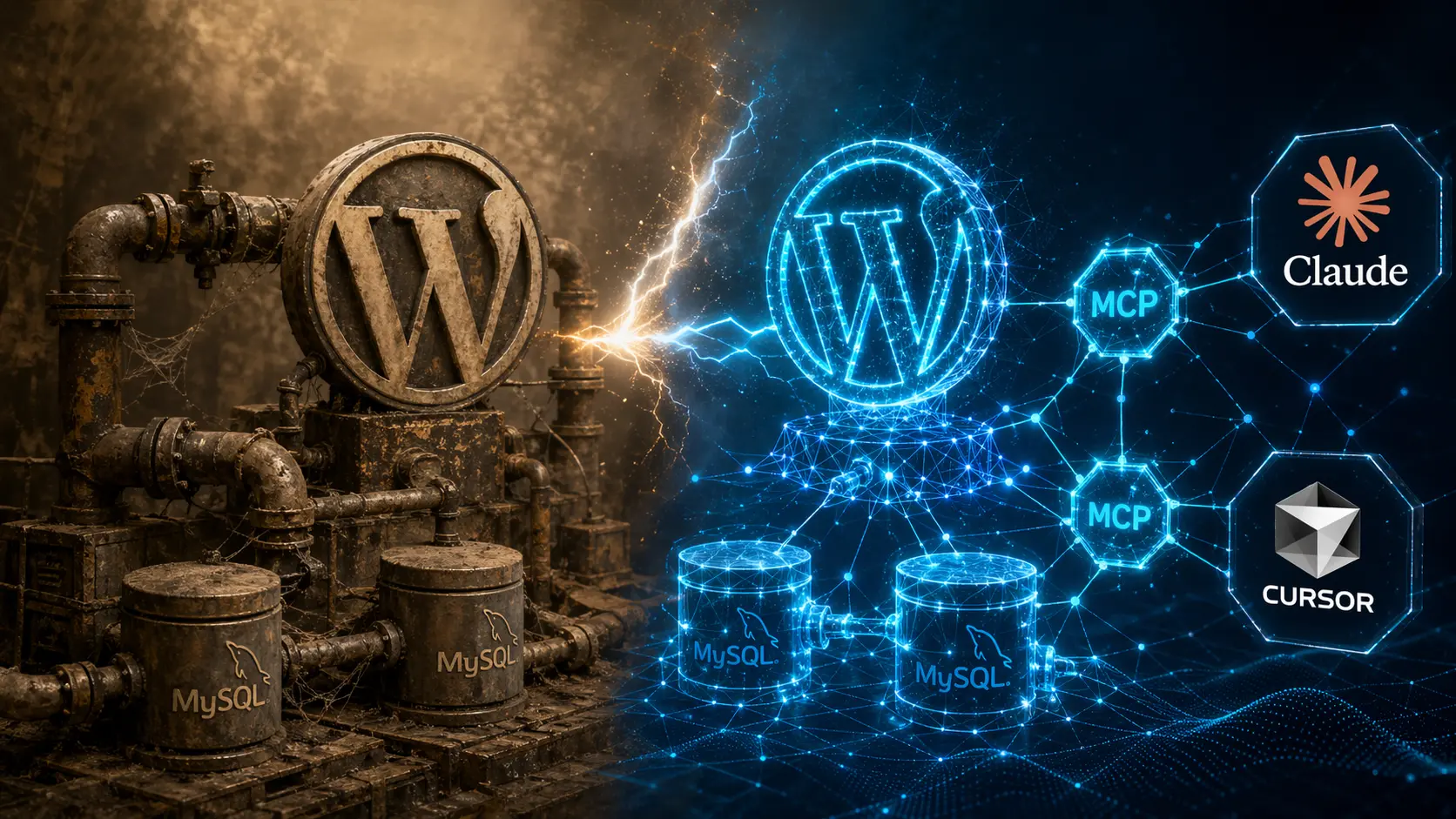
WordPress has spent twenty years loading data through the classic wp_posts and wp_postmeta tables. That design has been both its greatest strength (stability, plugin compatibility) and its most embarrassing limitation (performance at scale, lack of real-time features). The 7.0 team originally planned to stuff collaborative-editing state into postmeta and lean on transients for user presence. Testing revealed what many engineers quietly predicted for years — the legacy schema cannot handle modern workloads without stacking cache hacks. The new architecture requires a MySQL 8.0 floor and recommends PHP 8.2+. That single requirement will force hundreds of thousands of sites to upgrade their hosting stack.


The real headline: WordPress becomes an AI-native platform


Buried under the database drama is the news that actually changes the game. WordPress 7.0 ships with a new WP AI Client, an Abilities API for exposing site actions, a Workflows API for chaining them, and an MCP Adapter implementing Anthropic's Model Context Protocol. The MCP Adapter is the headline. It lets Claude Desktop, Claude Code, Cursor, and VS Code discover and invoke WordPress actions directly through authenticated MCP calls. In practice, a content team can tell Claude, "publish the draft I finished last night, tune the meta description, and schedule the social posts," and the whole chain executes through first-party protocol — not a hacked-together REST integration.


What it means for SEO and GA


Search Engine Land and Google's own Addy Osmani have been hammering the same message for months: put the answer in the first 400 words so LLMs can find it before they stop scanning. Combined with the MCP Adapter, a 7.0 site can now expose structured Abilities specifically designed for AI crawlers — canonical Q&As, product specs, event schedules. That is no longer SEO. It is GEO — Generative Engine Optimization — shipped as core infrastructure. For GA, the implications are subtler. When AI agents traverse your site through MCP, they do not generate normal pageview events. If Gartner is right that 40% of analytics queries will be natural-language-generated by the end of 2026, your dashboards need to distinguish human visits, agent traversals, and LLM training scrapes — and today they do not.


My take


I have watched WordPress evolve since the Gutenberg debate. I have seen teams swear off it for Next.js and crawl back when their SEO numbers collapsed. WordPress 7.0 is not just another release. It is the platform finally admitting that AI agents are users, that databases must be modern, and that the PHP stack can host agentic workflows without reinventing itself. The delay is annoying. The infrastructure costs are real. But for the first time since 2018, every serious PHP developer has a reason to rebuild, not patch around. If you run WordPress sites professionally, May 20 is the day your job description changes. Start testing PHP 8.2 and MySQL 8.0 today. Register your first Ability this weekend. By Q3, "AI-enabled WordPress developer" will not be a niche specialty — it will be the baseline.


Web Development Back to Blog