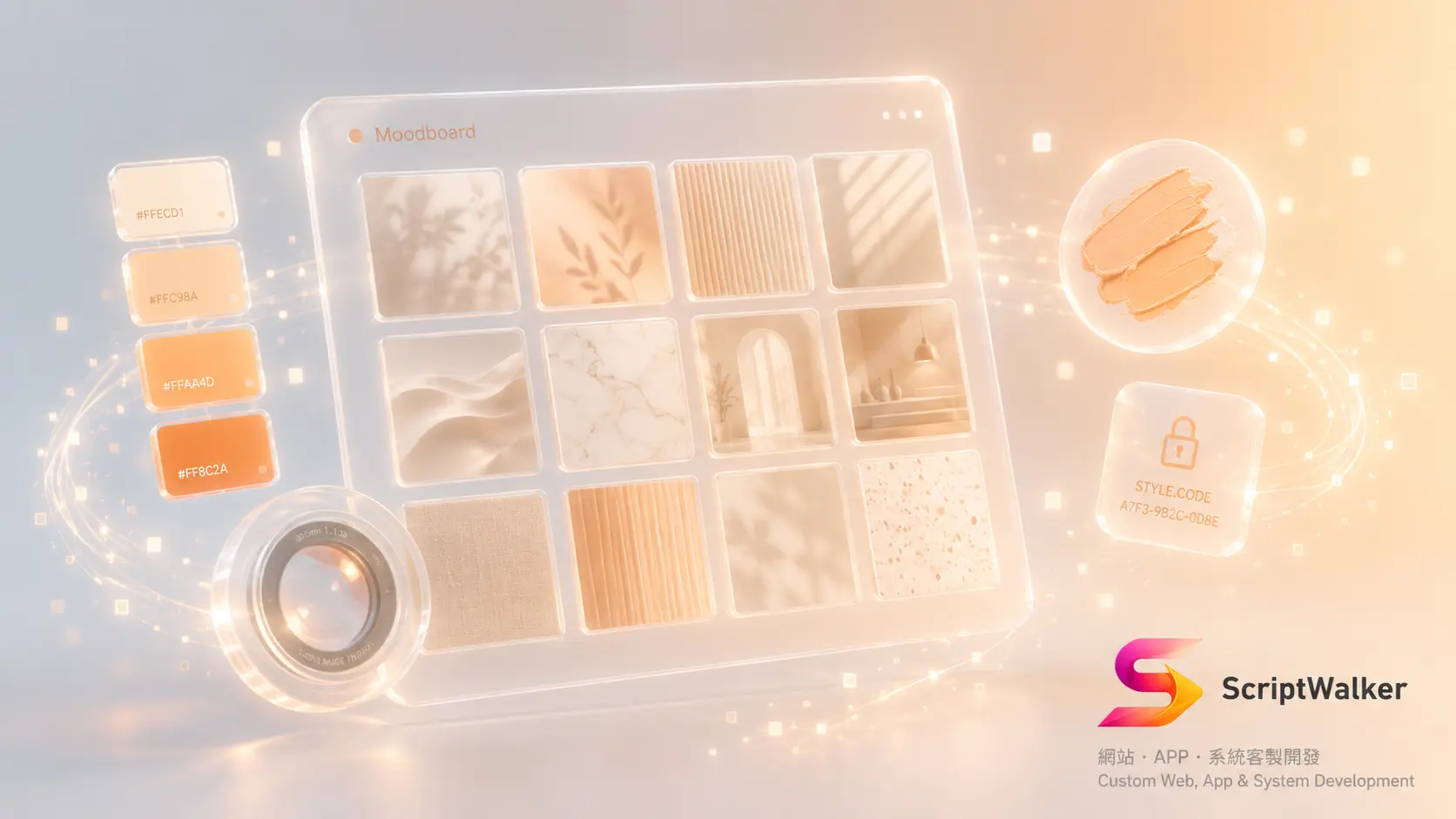
1. One image looks great. A whole set falls apart.
In 2026 nobody asks whether AI image tools are usable. The question that actually blocks small and mid-sized brands is different: you can roll the same prompt thirty times and still not get a coherent set you can ship. The homepage hero looks like warm studio photography, the category banner returns as a cool-toned illustration, the OG image arrives with a third brush texture. Individually fine; side by side, three different companies. This is not a model-capability problem, it is a workflow problem — brand visuals need a repeatable, handoverable, versioned system, not a one-shot image machine.
2. Three real cases
Klarna (Swedish BNPL). Its own press release states that in Q1 2024 the team produced over 1,000 images using Midjourney, DALL·E and Firefly, cutting the image development cycle from six weeks to seven days and reducing image production cost by roughly USD 6 million annualised. The important part: the pipeline has brand-consistency, image-quality and legal checks built in. Asset-library thinking, not slot-machine thinking.
Coca-Cola. Two consecutive AI-generated Christmas campaigns, 2024 and 2025, drew heavy criticism, both times over the same thing: visuals drifting between photoreal and cartoon, with animal characters changing proportion shot to shot. The red-and-white palette and delivery trucks are among the strongest visual assets on earth — which is exactly why drift gets caught instantly.
The more distinctive your brand assets, the harsher the penalty for style drift.
Heinz. The 2022 "A.I. Ketchup" campaign by Rethink (2023 Clio Gold) proved the same point in reverse. Fed prompts like "ketchup" and "impressionist painting of a ketchup bottle," DALL·E 2 kept returning the arched keystone label, red-and-white palette and unmistakable bottle silhouette of Heinz. Own a distinctive shape and palette and the model converges on it by itself. Adobe clearly read the same lesson: its April 2026 Brand Intelligence announcement turns brand guidelines from a static PDF into a system that keeps learning from review feedback and rejections.
3. The design logic: lock the variables, not the pictures
People recognise a brand through a few repeating visual variables, not any single image. As an enforceable spec that means locking six things: palette, light direction and colour temperature, focal length and depth of field, material texture, negative-space ratio, and whether people appear. Hold those steady and you can swap the subject a hundred times and still look like one brand. Midjourney's official documentation says a style reference "doesn't copy objects or people, just the overall style — like colors, medium, textures, or lighting," and advises describing what you want to see rather than how to modify the reference.
4. Technical cost and limits (the honest version)
- Setup time. In ScriptWalker's project experience, building a usable style system — seed images, srefs, locking codes, writing the spec — takes about one working day. Per-image time then drops from roughly half an hour of rerolling to 10–20 minutes. Break-even lands around image number 20.
- Parameters don't interoperate.
--sw(0–1000, default 100) controls style-reference strength, but the docs note it is not compatible with Moodboards; with a moodboard you control intensity via--stylize. Mix them up and you get output you believe is locked but isn't. - Upgrades can erase your style. The docs state style reference was updated between V6 and V7 and older codes may no longer produce the same styles, requiring
--sv 4to fall back; V8.2 became the default in July 2026. Not pinning a version means betting brand consistency on a vendor's release calendar. - Training has hard requirements. Adobe's official best practices for Firefly Custom Models call for 10–30 high-quality images, each under 20 MB, resolution above 1024×1024, maximum 16:9 landscape — and warn that mismatched aspect ratios cause cut-off issues.
- File size and SEO. Gemini 3 image models output up to 4K and mix up to 14 reference images, but a 4K PNG routinely lands at 8–15 MB; dropping that into a hero will wreck LCP (good is 2.5 seconds or less). Separately, Google Search Central documentation notes images carrying C2PA metadata may be surfaced in "About this image" as AI-created or AI-edited.
- Privacy cost. Midjourney's plan page lists Basic USD 10, Standard 30, Pro 60, Mega 120 per month (annual: 8/24/48/96). Stealth Mode, which keeps generations private, exists only on Pro and above — a hard cost on client work.
5. Industries where this fits — and where it doesn't
| Good fit | Poor fit |
|---|---|
| E-commerce lifestyle shots and seasonal key visuals (the Klarna pattern) | Medical and aesthetic-clinic before/after imagery (Taiwan's advertising rules are strict) |
| SaaS and B2B abstract illustration, blog headers | Primary shots for luxury goods, jewellery and watches (craftsmanship can't be fabricated) |
| Mood and interior atmosphere for hospitality and F&B | Food photography sold as "what you get" (misleading-advertising exposure) |
| Campaign work needing many placement variants fast | Real-estate interiors, real endorsers, team headshots |
The test is simple: if an image conveys mood, AI is excellent value; if it states a fact, don't use it.
6. How to apply this to your site (6 steps)
- ☐ Step 1 — Write the visual variable sheet. One page covering the six variables above. Without it you have no acceptance criteria.
- ☐ Step 2 — Assemble 8–12 seed images. Start from existing photography and illustration, generating only to fill gaps. A Firefly Custom Model needs 10–30.
- ☐ Step 3 — Build a moodboard and lock the code. Take the moodboard ID (
--p mID), or run srefs until you find a style code worth keeping, then record it. - ☐ Step 4 — Version it in the repo. Put style code, moodboard ID, model version and stylize value into
brand/ai-style.mdnext to your design tokens, so handover is a file rather than a conversation. - ☐ Step 5 — Generate in a scenario × placement matrix. List hero, category banner, OG image and LINE rich menu; hold the style code constant and vary only the subject. Never let the model render Chinese characters.
- ☐ Step 6 — Do the pre-launch engineering. Convert to AVIF/WebP, generate srcset, add
fetchpriority="high"to the hero andloading="lazy"below the fold, write meaningful alt text.
7. Common mistakes — and how to dodge them
- One prompt per image. Nothing is reusable, so the second batch never matches. Build the reference first, then swap subjects.
- Using a style reference as a content reference. "The look of this image but a dog" is a documented bad example; the correct form is "detailed portrait of a dog."
- Letting the model draw Chinese type. Glyphs break easily, and text baked into an image is invisible to search engines.
- Shipping 4K PNGs. An 8–15 MB hero will destroy mobile LCP on its own.
- Not pinning the model version. One vendor release and your entire site quietly changes brand overnight.
8. Further resources
- Midjourney Style Reference documentation —
--sref,--sw, style codes and Style Explorer. - Midjourney Moodboards documentation — moodboard IDs and version codes.
- Adobe Firefly Custom Models training best practices — official requirements on image count, file size, resolution and aspect ratio.
9. FAQ
Q1: I have no photography budget. Can I use AI images across the whole site?
For mood and abstract illustration, yes. For primary product shots, team photos and real locations, keep real photography. The practical answer is a mix: use AI for scenario shots and placement variants, and concentrate the photography budget on the few images that carry trust.
Q2: Can a style code stop working? How should I store it?
Yes. Midjourney's documentation states style reference was updated between versions and older codes may no longer produce the same style. Record the style code, moodboard ID, model version and stylize value in a version-controlled file, and test a small batch after every upgrade before rolling it out.
Q3: Will Google demote AI-generated images?
Google's public position is that it judges content quality, not production method. But per Search Central documentation, images carrying C2PA metadata may be labelled in "About this image" as AI-created or AI-edited. Rather than scrubbing markers, spend the effort on compression, alt text and load order — those are what actually move rankings.
Q4: Midjourney, Firefly or Gemini?
For stylistic distinctiveness and the moodboard mechanism, Midjourney. For enterprise licensing clarity and a trainable brand model, Adobe Firefly Custom Models. For feeding many references at once (the docs specify up to 14) and 4K output, Gemini 3 image models. Most brands end up running two of them.
10. Want AI imagery that becomes a handoverable brand asset?
ScriptWalker works across design and engineering. We turn your visual variables into a written spec, build the moodboard and lock the style codes, produce the first batch of placement images, then carry AVIF conversion, srcset, alt text and loading priority into your Laravel or Flutter project — handing over the style specification as a file. Bring the images you already have and we'll tell you honestly whether they can carry a full set.
- Email: [email protected]
- Phone: 0916-224-047
- LINE: @ufv9089p