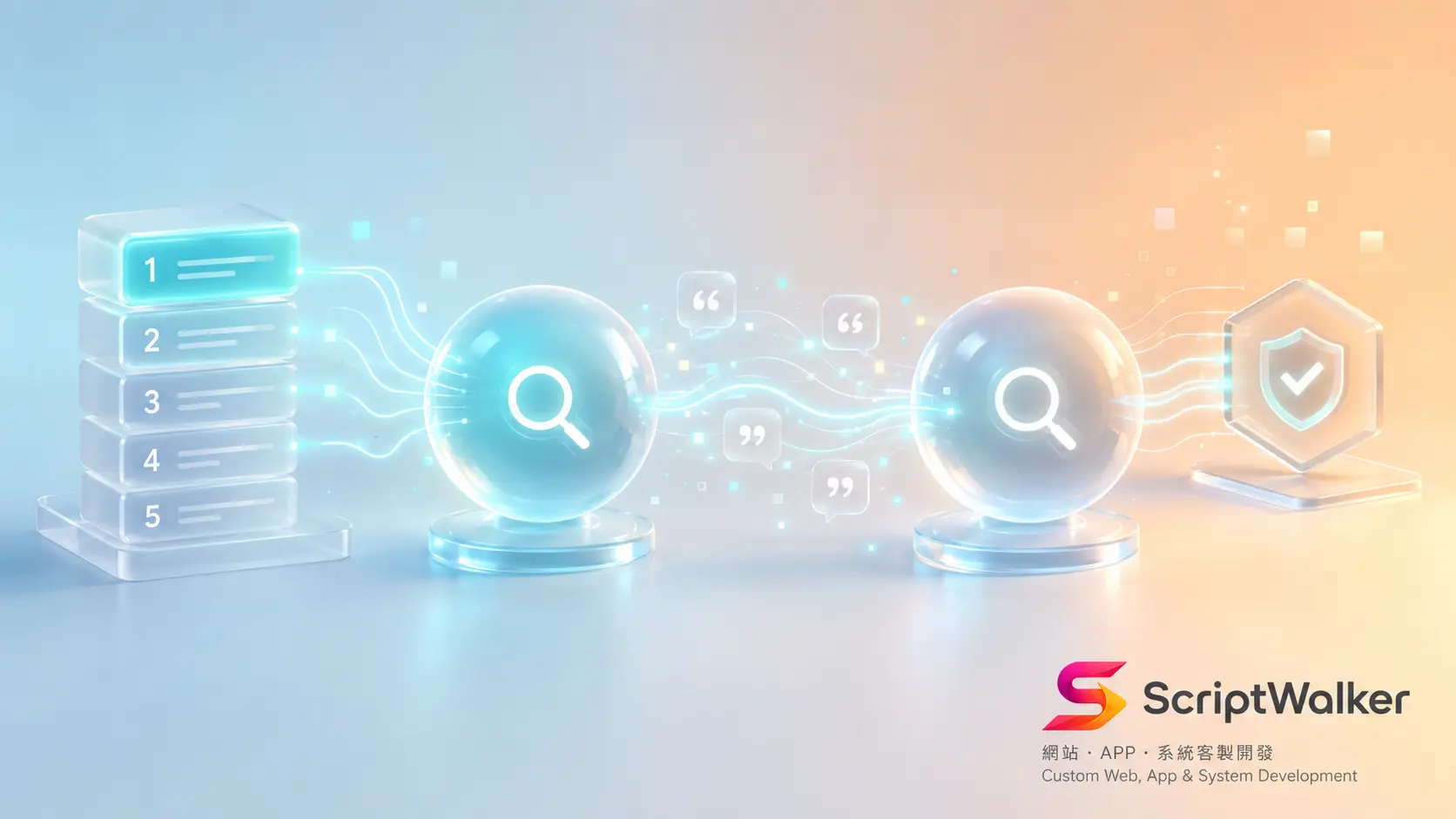
In July 2026, a study from CiteLens put a fact everyone half-sensed but nobody had quantified on the table: AI search is not one battlefield, it is two. The study ran 320 real buyer queries through ChatGPT, Perplexity, Claude, and Google's AI Mode, then compared every source each engine cited against the same query's Google and Bing results. The shock is in these numbers: Google's own AI Mode drew 93% of its citations from Google's top-10 organic results, and Perplexity 89% — but Claude just 53%, and ChatGPT only 30%.
What happened in this category over the past 12-18 months? "GEO" (generative engine optimization) went from a new term to an industry. Perplexity's January 2026 Series E pushed its valuation to roughly $22.6 billion, it closed another ~$200M in June for about $1.72B raised total, and crossed $450M in annualized revenue in March. Profound, focused on answer engine optimization (AEO), became a $1B unicorn in February. Money is flooding into "get your brand cited by AI," yet nearly all the marketing pitch treats AI search as a single monolith. CiteLens's data says: it is not.
Who are the players, and where is the category going? Google AI Mode and Perplexity are "retrieval" engines — they search, read, and cite live, so whoever ranks in classic search gets cited; SEO nearly decides fate. ChatGPT and Claude are "model memory plus selective retrieval" engines — they lean on whether a brand is a repeatedly-mentioned, recognized entity across the web, i.e. entity authority. The whole category is splitting into these two very different citation logics.
Will SMBs be affected? Yes, with good news and bad news in equal measure. Below we unpack the full numbers, what each of three reader types should do today, a comparison of GEO tools, and a "no SaaS subscription" DIY path to track AI citations yourself.
The Detail: Two Citation Logics, Two Sets of Numbers
Lay out CiteLens's core numbers: across 320 buyer queries, overlap between cited sources and Google's top-10 organic was — Google AI Mode 93%, Perplexity 89%, Claude 53%, ChatGPT 30%. In other words, where you rank on Google almost fully decides whether AI Mode and Perplexity cite you, but only weakly relates to ChatGPT.
Another set fills in the flip side: in an analysis of 500 commercial prompts across 126 categories on Google AI Overviews, 60% of the domains an AI answer cited did not appear in the same query's Google organic top 10; and 74% of answers cited YouTube while 84% cited forums or user-generated content (UGC). Meaning: SEO is the entry ticket, but "being written into third-party discussion, video, and reviews" is the other half of the win. Who benefits? Companies running both organic ranking and brand reputation. Who loses? Companies that just buy a single "GEO package" thinking one move wins all four engines.
Immediate Actions for Three Reader Types
For brand owners / SMB founders:
- Stop believing "one GEO package handles all AI." First confirm which engine your target customers actually use — B2B buyers often use ChatGPT/Perplexity, with entirely different logic.
- Split the budget: half into solid SEO (which wins AI Mode and Perplexity), half into "getting others to mention you" — reviews, directories, industry media, YouTube.
For marketers / SEO practitioners:
- SEO is not dead — it is the lifeblood of AI Mode and Perplexity citations. Keep Google top-10 as the prerequisite for AI visibility.
- For ChatGPT/Claude, pivot to entity authority: consistent brand name, structured data (Organization/Product schema), and cross-site consistent descriptions so the model "recognizes" who you are.
For developers / agencies:
- Get clients' structured data (Schema.org) right, especially Organization, Product, FAQ, and Article — the technical foundation of entity authority.
- Build a lightweight "AI citation tracker" — periodically query the four engines with a fixed set of prompts, log who gets cited, and turn it into a deliverable monthly report.
SaaS Tool Comparison
| Tool | Positioning | Price tier | Best for |
|---|---|---|---|
| Profound | Enterprise AEO / AI visibility analytics, cross-engine tracking | High (enterprise monthly, often hundreds of USD+) | Mid-to-large brands with dedicated marketing teams |
| Scrunch AI | AI search monitoring + brand citation tracking | Mid-high | Brands prioritizing AI exposure that need dashboards |
| Otterly.AI | Lightweight AI search ranking / mention monitoring | Mid (friendlier to small teams) | SMB entry-level tracking |
| DIY (manual queries + GA4 + Search Console) | Self-built tracking workflow | Low (labor only) | Budget-limited teams willing to invest hours |
What They Won't Tell You
- "AI citation rate" is a metric vendors cherry-pick. Tool sellers love showing "we grew your AI mention rate by X%," but not which engine that growth came from. If your customers all use ChatGPT, a report mostly measuring Perplexity exposure is irrelevant to your business no matter how pretty. Ask first: which engine, which query type.
- Entity authority has no fast-forward button, and that is what SaaS subscriptions least want to admit. ChatGPT/Claude weigh your consistent, long-accumulated presence across the whole web — built over months of PR, content, directories, and word of mouth, not conjured by a month of tooling. Tools help you "see" the problem but cannot fill the underlying gap of "not being mentioned enough."
A No-SaaS SMB Alternative
- Build a fixed list of 20-40 "buyer queries" (the questions you want to be found for), and each month manually run them through ChatGPT, Perplexity, Claude, and Google AI Mode, logging who is cited and whether you appear.
- Use free Google Search Console to guard organic ranking on those queries — which directly decides AI Mode and Perplexity citations.
- Keep your company's "name, description, category" consistent across major directories, industry media, Google Business, and wiki-style sources to feed entity authority.
- Use GA4 referral reports to watch traffic trends from sources like chatgpt.com and perplexity.ai.
FAQ
Does SEO still matter?
Very much, but it depends on the engine. SEO nearly fully decides Google AI Mode (93%) and Perplexity (89%) citations, yet only weakly affects ChatGPT (30%). Treat SEO as the prerequisite for AI visibility, not the whole game.
So how do I get cited by ChatGPT?
Through entity authority: consistent brand name and description, solid structured data, and getting media, forums, reviews, and directories to mention you repeatedly. It accumulates over months, with no one-click shortcut.
Do SMBs have to buy a GEO tool?
Not necessarily. Tools help you "see" your citation status but cannot fill the content and reputation gap itself. On a limited budget, start with manual queries plus Search Console plus GA4, and spend the money on content and PR.
Which engine should I prioritize?
The one your customers use. Ask a few real customers "which AI do you use to find things"; B2C and informational queries often land on Google AI Mode, B2B buyer research often on ChatGPT/Perplexity — allocate accordingly.
My Take
The mainstream narrative is "SEO is dead, do GEO now." I read it the opposite way: SEO is not dead — in half of the AI engines it became the only deciding factor. What actually died is the fantasy of "one move wins all." CiteLens's numbers cleanly split AI search in two: retrieval engines (Google AI Mode, Perplexity) decided by SEO, memory engines (ChatGPT, Claude) decided by entity authority — and most GEO packages pretend these are the same thing. For a shop like ScriptWalker the business implication is direct: instead of selling a vague "GEO optimization," split it into two deliverable, verifiable services — "technical SEO + structured-data foundation" for retrieval engines, and an "AI citation monthly tracking report" that lets clients see results. When the whole market is selling an invisible promise, whoever can break it into two things a client understands, with quantified reports attached, is the one who gets paid.
Sources
- CiteLens / EIN Presswire — SEO Decides AI Citations on Google and Perplexity, Not ChatGPT (first-party study release)
- MarTech Series — CiteLens Study coverage (first-party repost, with methodology)
- Google Search Central — Structured Data documentation (official authority)
- AI Business Weekly — Perplexity valuation and funding data (third-party)
- Omnius — AI Search & GEO Report 2026 (third-party, AI Overviews citation-structure data)