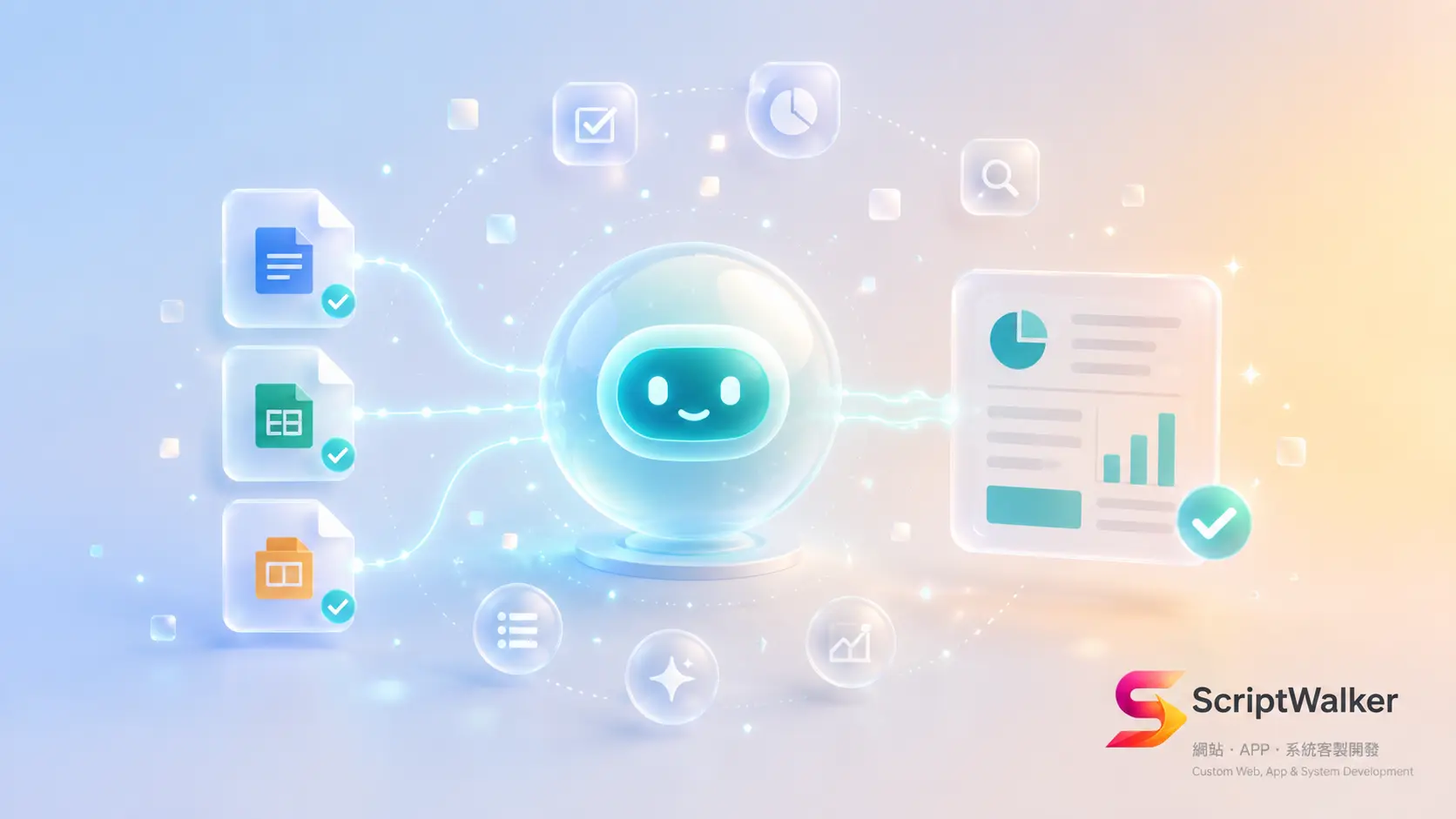
On July 9, 2026, OpenAI launched ChatGPT Work — an agent that does the work: it connects to your apps and files, researches across sources, then produces deliverable documents, spreadsheets, presentations, and reports. A day earlier (July 8), OpenAI rebuilt ChatGPT Voice on the new GPT-Live-1 model, listening and speaking simultaneously with mid-conversation web search and memory. Two launches in two days send a clear signal: OpenAI is pushing ChatGPT from "a box that answers" to "an employee that finishes the job."
To grasp the weight of this, look at the last 12–18 months. Through 2025–2026, mainstream models' agentic abilities (decomposing tasks, calling tools, executing across steps) moved from demo to product: first running terminals and writing whole repos, now crossing your Drive, inbox, and CRM to put a finished report on your desk. Per eMarketer, nearly a third (31.3%) of the US population will use generative AI search in 2026 — when "finding answers" and "producing deliverables" are both absorbed by one interface, the distribution logic for content and services is being rewritten.
Rivals? Microsoft Copilot (bound to Microsoft 365) and Google Gemini (bound to Workspace) already do "AI inside your documents"; Anthropic's Claude runs deep on the developer and agent-tooling side. The difference: Copilot/Gemini help "inside existing documents," while ChatGPT Work wants to be the agent layer that "finishes the whole thing across apps." The category is consolidating from "assisted typing" toward "agentic delivery."
For a small business or agency in Taiwan, this is close to home: when your client can prompt ChatGPT Work into a "good enough" report or first-draft deck, the deliverable itself is losing value. Below: what actually shipped, how three reader types should respond now, and a DIY path that doesn't require enterprise subscriptions.
Deal details: scope and numbers
ChatGPT Work's core is collapsing "research → cross-source synthesis → finished deliverable" into a single prompt. It leans on connectors — linking your cloud drive, inbox, calendar, and some enterprise systems so the agent has your context rather than generating in a vacuum.
- OpenAI's base is large: per July 2026 stats, ChatGPT sits around 900M weekly active users and roughly $25B ARR — meaning "agent delivers finished work," once default-on, reaches users in the hundreds of millions.
- Directionally, OpenAI gave free users lightweight versions too (e.g., GPT-Live-1 mini for Voice), signaling agentic delivery is meant to be universal, not enterprise-only.
- The publisher/service concern persists: OpenAI's crawl-to-referral ratio has been estimated as high as 857:1 (~170x worse than Google's traditional 5:1) — "content consumed, traffic not returned" hasn't improved.
Immediate actions for three reader types
- Brand owners / SMBs: Separate "what AI can directly generate" from "what it can't." Generic reports, product descriptions, and FAQs your client will just prompt AI to make; invest instead in assets AI can't fake — your first-party data, real case studies, proprietary process, and trustworthy people.
- Marketers / SEO: Since agents read your site to "make deliverables," structure content for machines: clean FAQ structured data, explicit pricing pages, citable stats with sources. The goal shifts from "rank #1" to "be chosen by the agent as a trusted source."
- Developers / agencies: Learn to build "connectors and agent workflows," not just static sites. Clients will want "connect our systems to AI so it can safely act for us" — a new service category.
SaaS comparison table
| Option | Positioning | Price (approx.) | Best for |
|---|---|---|---|
| ChatGPT Work (OpenAI) | Cross-app agent, finished deliverables | Enterprise/team subscription | Teams needing cross-source auto-output |
| Microsoft 365 Copilot | In-document assistant bound to Office | ~$30/user/month | Companies deep in Word/Excel/Teams |
| Google Gemini (Workspace) | Assistant bound to Google | Bundled with Workspace | Companies on Gmail/Docs/Drive |
| Self-hosted (Claude/OpenAI API + n8n) | DIY custom agent workflow | API usage + hosting only | SMBs wanting data/flow control |
What they won't tell you
- "Finished" isn't "correct": agents get to 80 points fast, but the last 20 (fact-checking, consistency, compliance, the boss's taste) still need a human. Cost moves from production to verification.
- Connecting your data means handing it over: wiring inbox, cloud, and CRM to an agent without proper permissions and auditing opens a door onto your trade secrets — most SMBs can't yet govern this.
- The no-referral structure is unchanged: an 857:1 crawl ratio means the "get read by AI, get free traffic" dividend keeps thinning.
SMB alternative without SaaS subscriptions
You don't need enterprise seats for everyone. DIY: use n8n (self-hostable, open source) as your workflow engine, wire in the OpenAI or Claude API (pay usage only), and turn "that weekly report/reply/roundup" into an automated flow — source data from your own database or a Google Sheet, output to your format. The key is building in least-privilege access and a human review gate: the agent drafts, a person hits send. You get agent efficiency without handing your whole company's data to a third party.
FAQ
Will ChatGPT Work replace my marketing or admin staff?
Not "replace" short-term, but "reallocate." Repetitive roundups, first drafts, and collation get absorbed; human value moves to verification, judgment, relationships, and strategy. Rather than fear replacement, reallocate your team's time to what AI can't do.
Is it safe to connect company data to an AI agent?
Depends how you connect. Principles: least privilege (only the folders it needs), auditability (who let the agent do what and when), and a human review gate (a person confirms before send). Until those three are in place, don't wire up CRM or finance systems.
Do I still need SEO for my website?
Yes, but the goal changed: from "rank #1" to "be selected and cited correctly by AI agents." Do it by structuring content (FAQ, pricing, stats with sources) so machines find it easy to read and trust.
What's the most practical first step for an SMB?
Pick one recurring, rule-clear output (weekly report, support FAQ replies, data roundup), build a semi-automated flow with the API plus n8n, and keep human review. Prove value in a low-risk scenario, then expand.
My take
The mainstream narrative is "agentic AI makes everyone a superhero." My contrarian call: within 18 months, tools like ChatGPT Work will crater the market price of "the deliverable" itself, and what appreciates is "the credibility of and accountability for that deliverable." When anyone can generate a professional-looking deck, clients pay for someone who takes responsibility for its correctness and can wire it into their actual systems.
For ScriptWalker: shift the service center of gravity from "we make you a thing" to "we safely connect AI into your operations and own the outcome." Concretely, two new service lines — (1) AI workflow integration (connectors + permissions + auditing + human review gate), and (2) "AI-ready" content and data structuring so clients' information is cited correctly in the AI era. Both grow in demand the stronger agents get.
Sources
- OpenAI: ChatGPT Work launch — https://openai.com/index/chatgpt-work/ (primary)
- OpenAI: ChatGPT Voice / GPT-Live-1 — https://openai.com/index/chatgpt-voice/ (primary)
- eMarketer: GEO/AEO and 2026 generative-search penetration — https://www.emarketer.com/content/faq-on-geo-aeo--where-ai-search-seo-overlap-2026 (third-party)
- Press Gazette: crawl-to-referral ratio and publisher disputes — https://pressgazette.co.uk/platforms/news-publisher-ai-deals-lawsuits-openai-google/ (third-party)
- Google Search Central: FAQ structured data docs — https://developers.google.com/search/docs/appearance/structured-data/faqpage (primary)