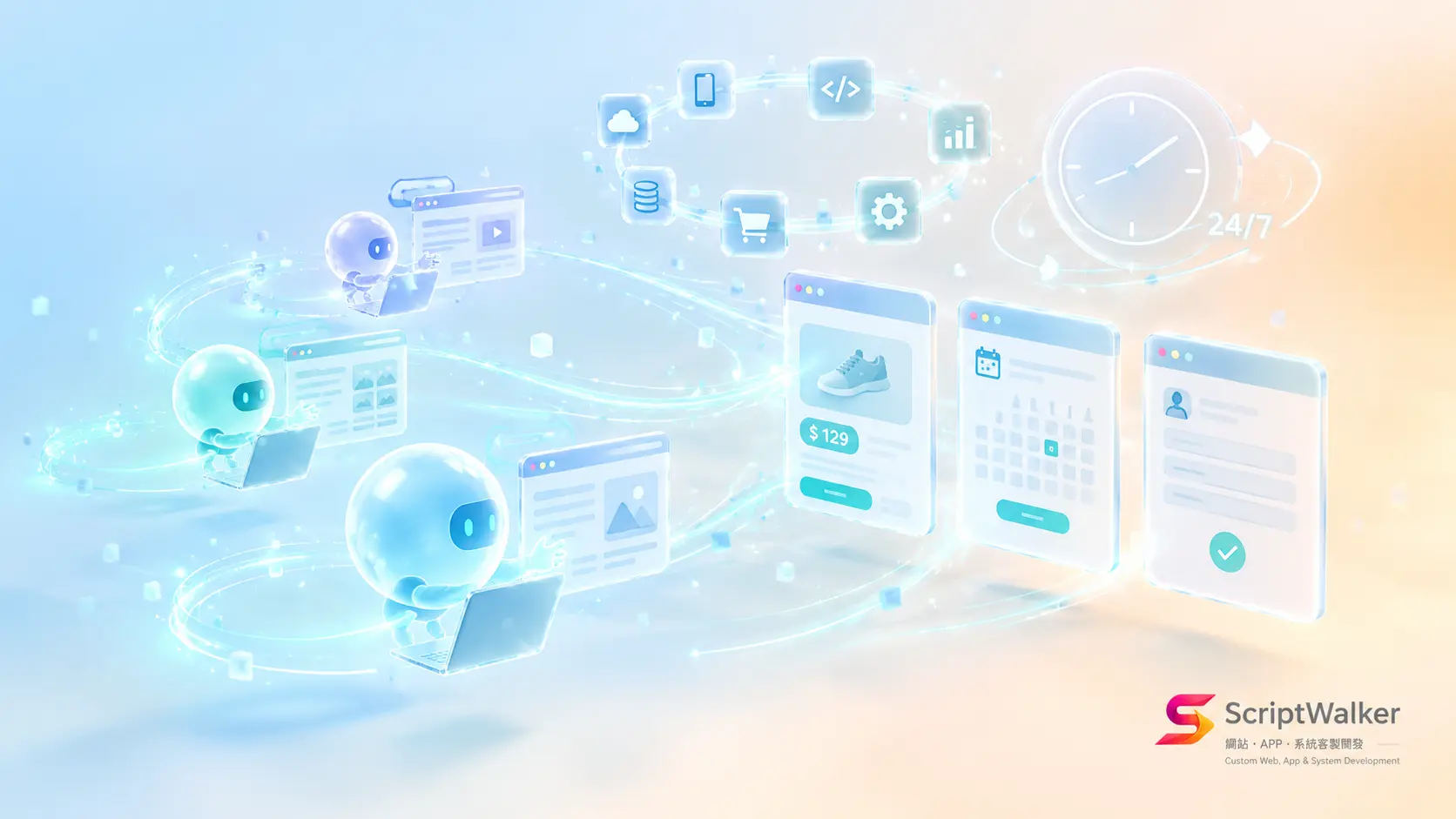
On September 29, 2026, at DevDay in San Francisco, OpenAI unveiled Dots: always-on agents that work around the clock. According to OpenAI's official recap, each dot runs on GPT-6 Astra with its own cloud computer and browser, connects to more than 4,000 apps through plugins, and does read-only proactive research when idle. The first dot is included in Pro and Business Premium plans, with a beta for Enterprise, Education and Healthcare customers. OpenAI also said ChatGPT now has 1.2 billion weekly users. In one line: ChatGPT is moving from "you ask, it answers" to "you assign, it gets it done."
This did not come out of nowhere. Over the past 18 months AI has been rewriting the front door of search: Search Engine Land, citing Comscore, reports that Google AI Overviews now appear in 39% of U.S. desktop searches; OpenAI shipped the web-operating ChatGPT agent in 2025, and Perplexity launched its agentic browser Comet. The timing works now for two reasons. Model costs are falling, with GPT-6.1 Sol, announced the same day, pitched as near-Astra capability at a fifth of the price. And an agent is only useful if it is always on, which a cloud computer makes possible without tying up the user's laptop.
Rivals are on the same road. BGR's roundup frames Dots as a direct answer to Meta's Muse and Grok Bot, while Google is building agent capabilities into Gemini and AI Mode. The difference is distribution: Meta has social and messaging, Google has search and Android, and OpenAI has 1.2 billion weekly users plus workplace hooks into Slack and Teams. The category is splitting from chatbots into agents that go to work, and the race is about who connects to the most real systems.
For small businesses the question has changed. It used to be whether AI would cite you. Now it is whether an AI agent that lands on your site can find prices, book a slot or submit an inquiry. Below: who is affected, what to do, and how to check without paying for a subscription.
What Happened, in Numbers
- What Dots do: always on, a dedicated cloud computer and browser, 4,000+ app connections; users set rules for which actions run automatically, which need approval and which are blocked. OpenAI's example: a tester's dot spotted a forgotten invoice, prepared it and sent it after approval.
- Plans and access: first dot included in Pro and Business Premium; available in ChatGPT desktop, web and mobile, Slack and Teams, with SMS coming. A new $500-per-month Pro 500 tier was also announced.
- Enterprise pilots: The Next Web reports that OpenAI is piloting specialist dots for procurement, invoicing, email marketing, customer support and contracting.
- For developers: the Agents API now supports computer use; Sign in with ChatGPT launched with 16 partners including Notion, Vercel and Devin, letting users apply their plan allowance to those services.
Who wins? Businesses whose data already lives in mainstream SaaS (Google Calendar, Notion, Shopify and the like), which agents can read and write through plugins. Who loses? Sites with prices only in images, bookings only by phone, or forms that CAPTCHAs make impossible to finish. The agent simply moves on to the next business.
What Three Kinds of Readers Should Do Now
Brand owners and SME owners
- Put prices, opening hours and services on your pages as text, not only in images or PDFs.
- Make sure your Google Business Profile matches your booking or reservation platforms; agents usually check those first.
Marketers and SEO practitioners
- Track AI agent visits and AI-referred human clicks separately in GA4 and server logs; they mean very different things.
- Add Product, Offer and LocalBusiness structured data to key service pages so agents do not have to guess prices.
Developers and agencies
- Audit inquiry and booking forms: proper labels, text error messages and a clear confirmation page after submit.
- Do not block every AI user agent. Separate training crawlers from agents acting for a real person, then decide per page type.
Agent-Traffic Tool Comparison
| Tool | Main function | Price range | Best fit |
|---|---|---|---|
| Cloudflare AI Crawl Control | Identify and allow, block or charge AI crawlers and agents | Basic features on the free plan | SMBs already on Cloudflare |
| Dark Visitors | AI agent visit analytics, automatic robots.txt upkeep | Free plan available | Small sites that want to understand agent traffic first |
| Profound (Agent Analytics) | Combined AI visibility and agent-visit reporting | Enterprise pricing | Brand and e-commerce marketing teams |
| Scrunch AI | Optimizing how sites are presented to AI agents | Enterprise pricing | High-traffic brands with AI visibility KPIs |
What They Won't Tell You
- Users are not agents: 1.2 billion is ChatGPT's weekly audience, but Dots are limited to higher-priced plans. In the near term only a small group of heavy users and companies will send agents out.
- Agents prefer connected systems: with plugins into 4,000+ apps, a dot avoids opening a browser when it can. Your site may not be visited at all; it may be routed around.
- Errors land on the merchant: OpenAI itself warns that dots make mistakes. If an agent books the wrong slot or specs, your support team handles it, and without clear confirmation and cancellation flows, disputes will rise.
A Subscription-Free Alternative for SMBs
Start with your server logs. OpenAI's crawler documentation separates GPTBot (training), OAI-SearchBot (search) and ChatGPT-User (acting for a user). One command gives you a count:
grep -Ei "ChatGPT-User|OAI-SearchBot|GPTBot|Perplexity-User|Claude-User" access.log | awk '{print $7}' | sort | uniq -c | sort -rn | head -20- Run it monthly, list the 20 URLs agents visit most, and confirm their prices and forms are text-based and usable.
- Open your booking page in a private window with JavaScript turned off. Whatever you cannot see there, an agent may not read either.
Frequently Asked Questions
What are Dots, and how do they differ from ChatGPT?
Dots are always-on agents OpenAI launched at DevDay 2026. Each has its own cloud computer and browser, connects to 4,000+ apps and keeps working on tasks under rules the user sets, while regular ChatGPT answers one question at a time.
Do SMB websites need a special interface for AI agents?
Mostly no. Putting prices and service details in text, adding structured data and making sure forms submit with a clear confirmation page pays off more than building an agent-only interface.
Should we block AI agents in robots.txt?
Handle them separately. You can decide on training crawlers based on your content strategy, but blocking agents that act for real people, such as ChatGPT-User, can make a prospect's inquiry or booking fail outright.
How do I know whether AI agents have visited my site?
Look for user-agent strings such as ChatGPT-User, OAI-SearchBot and Perplexity-User in your server logs, and create a custom GA4 channel group for AI sources to track agent visits and human clicks separately.
Our Take
The mainstream view says the agent era is here, so build MCP servers and agent-only interfaces now. We disagree. Over the next 12 months, Dots will not send meaningful traffic to Taiwanese SMBs: they are limited to expensive plans and prefer plugins over browsers. Their real effect is filtering. As a small number of high-value customers start sending agents to compare and book, sites where tasks cannot be completed will lose out without anyone noticing, and the loss will not even show up in your reports. So the investment to make now is not a new interface but making existing pages machine-readable, forms submittable and outcomes confirmed. That helps human visitors too, so the work is never wasted.
What it means for ScriptWalker: a fixed-scope "Agent Readiness Audit" covering log analysis, structured data, form usability testing and confirmation emails, starting at NT$25,000. To find out whether AI agents can get things done on your site, contact us:
- Email: [email protected]
- Phone: 0916-224-047
- LINE: @ufv9089p
Sources
- Primary: OpenAI: DevDay 2026 Recap
- Primary: OpenAI: Overview of OpenAI Crawlers
- Primary: Google Search Central: LocalBusiness structured data
- Third party: 9to5Google: OpenAI launches Dots
- Third party: The Next Web: OpenAI launches dots
- Third party: BGR: Everything OpenAI announced at DevDay 2026
- Third party: Decrypt: OpenAI gave AI agents their own computers
- Third party: Search Engine Land: AI Overviews in 39% of U.S. desktop searches