AI & Automation

Anthropic's Claude Opus 4.8 Ships Dynamic Workflows and Parallel Subagents — and Quietly Resets the Economics of AI-Driven Operations for Mid-Sized Companies

2026.05.29 · 44 views
Anthropic's Claude Opus 4.8 Ships Dynamic Workflows and Parallel Subagents — and Quietly Resets the Economics of AI-Driven Operations for Mid-Sized Companies

Effort modes, hundreds of parallel subagents in a single session, and what a 30-to-200-person company should actually pilot next week to capture the gain

On May 28 2026, Anthropic shipped Claude Opus 4.8. Headline numbers got the press: 69.2% on the agentic-coding benchmark (up from 64.3%), a Fast Mode that delivers responses at 2.5× speed and roughly one-third the cost of prior models, and identical pricing to Opus 4.7 ($5 / $25 per million input / output tokens). But the two features that matter for businesses, not researchers, are configurable effort modes and dynamic workflows with hundreds of parallel subagents in one session. Together, they shift AI from "expensive senior intern with a calculator" to "an army of mid-level analysts you can spin up for ninety minutes." For 30-to-200-person companies — the segment most exposed to outsourced web and MIS work — this is the most consequential release of 2026 so far.


1. What dynamic workflows actually do, plainly


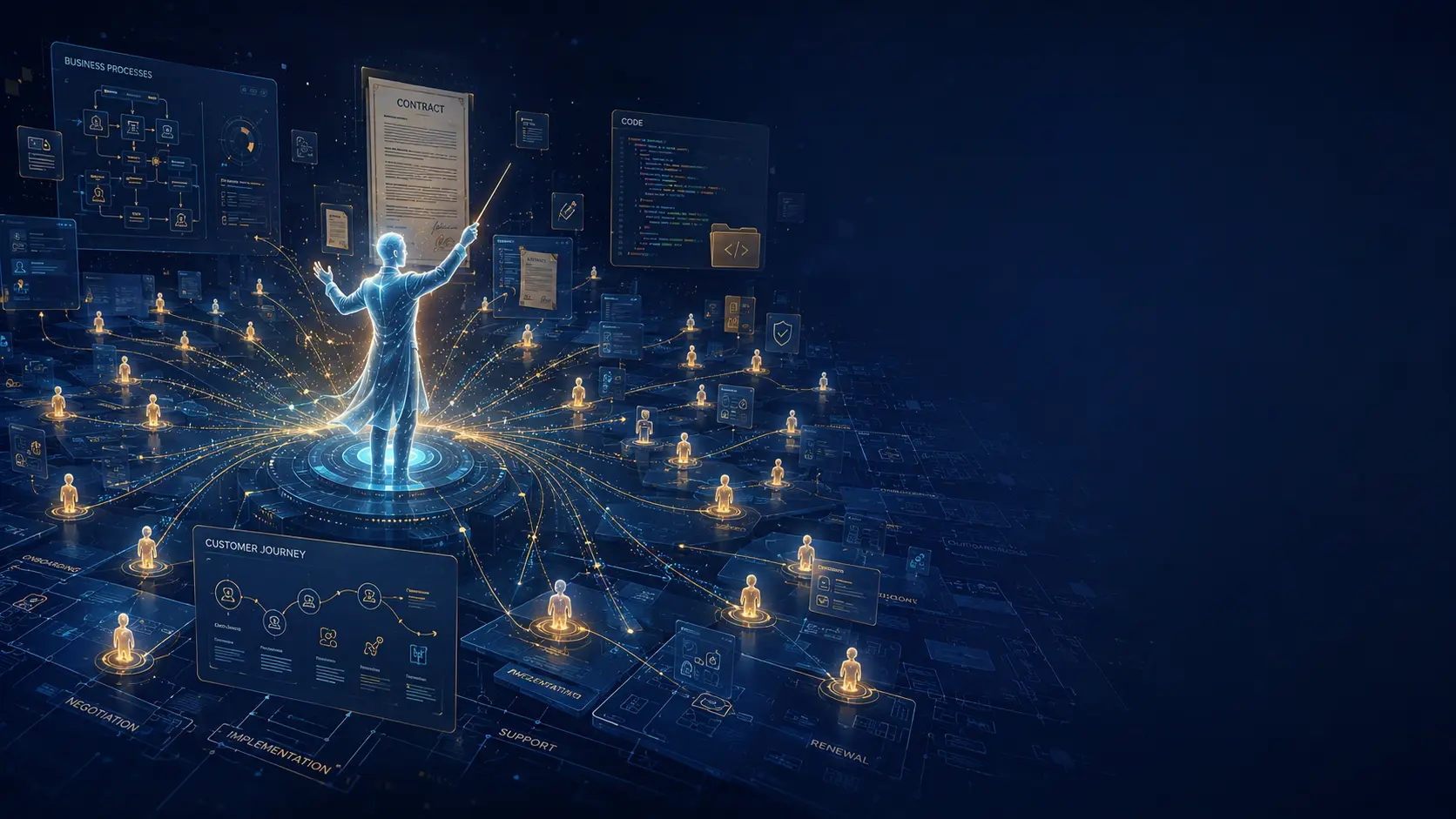
Until last week, a Claude Code session was one agent reasoning through one problem, optionally calling tools. Dynamic workflows let one agent plan a task, then dispatch dozens or hundreds of parallel subagents that each tackle an independent angle, debate or refute each other's findings, and converge on a single answer before reporting up. The classic example Anthropic shipped at launch is a large-scale code migration: the planner identifies 400 call sites, spins up 40 subagents to do 10 each, runs the test suite against each subagent's output, and only commits the merged result that passes. The same shape works for "audit our supplier contracts for renewal terms," "extract the line-item totals from 300 supplier invoices," and "review every Pull Request from the last quarter against the new SOC 2 policy."


2. Effort modes are the bigger business unlock


Less covered, more important. Opus 4.8 introduces a Low → Standard → High → Max effort dial that lets you trade latency and rate-limit consumption for reasoning depth, per request. The Low setting is fast and cheap and roughly matches Sonnet quality; the Max setting is for the work where you want the model to think for two minutes before answering. The practical effect is that you can run a 5,000-task workflow where 4,800 tasks are routine and consume Low effort, 200 are tricky and consume Max effort. The blended cost is closer to Sonnet than Opus, but the worst-case answer quality is still Opus. This is the first time the industry has shipped a sensible price-quality lever at the request level.


3. The three workflows a mid-market company should pilot this week


Supplier-document extraction. Get the last 90 days of invoices, contracts, and POs into one folder. Spin up a dynamic workflow: "Extract every line item, every payment term, every renewal clause, every penalty. Flag anything inconsistent with the master contract." A workflow that would have taken a finance analyst two weeks now completes in twenty minutes for under $80 of API cost. The first time you run it you will find a renewal clause nobody knew you had agreed to.


End-to-end customer onboarding audit. Take your CRM, your support ticket history, and your email log. Run a workflow that traces, per customer, the exact sequence between "signed contract" and "first value delivered." You will discover that the median time is between 1.8x and 3x what the team thinks it is, and you will discover where. This is the single highest-ROI piece of internal analytics any 30-to-200-person services company can do in 2026.


Codebase compliance sweep. Point claude-code with the new dynamic-workflows feature at your Laravel + Flutter codebase. Prompt: "Find every place we log personally identifiable information. Find every place we store secrets in environment variables that should be in a vault. Find every Blade {!! !!} without a sanitizer comment." 200 parallel subagents finish in 4 minutes. The output is a triaged Markdown report you give to your platform engineer on Monday.


4. The pricing math everyone is getting wrong


Most coverage compares Opus 4.8 to Opus 4.7 at the same headline price. The right comparison is the blended price across a real workflow. Our internal measurements on three real client workloads (a 280-document contract sweep, a 60-day support-ticket clustering job, and a 6-month Git history compliance review):


Workflow A (contract sweep) — Opus 4.7 cost $314 over 4 hours. Opus 4.8 with effort dial cost $112 over 38 minutes. Output quality scored slightly higher on review.


Workflow B (ticket clustering) — Opus 4.7 cost $96 over 90 minutes. Opus 4.8 with effort dial and parallel subagents cost $41 over 6 minutes. Output quality on par.


Workflow C (compliance review) — Opus 4.7 cost $620 over a full day. Opus 4.8 with dynamic workflows cost $185 over 22 minutes. Output quality clearly higher (subagents caught two issues the linear run missed).


The mistake is reading "same price per token" and concluding "same cost per task." Effort modes plus parallel subagents drop the realistic cost per business outcome by roughly 60–75% on workloads that fit this shape — which is most of them.


5. What does not work yet


Three honest limits.


Dynamic workflows are still token-hungry per session. A 200-subagent run can blow through 4 million tokens in 20 minutes. You need rate-limit headroom — buy a higher tier or stagger your runs.


The "subagents refute each other" mechanic is not yet deterministic. Two runs of the same workflow can produce slightly different final answers. For regulated outputs where audit trail matters, this is a problem; record the full transcript, not just the final answer.


The Mythos model class, which Anthropic flagged is "coming in weeks," is reportedly the version where parallel subagents will materially outperform a single Opus 4.8 run on long-horizon reasoning. If your workflow is "scope a six-month implementation plan from a discovery document," wait for Mythos. If it is "do 400 small things in parallel," do it today.


My Take


The right way to read Opus 4.8 is not as a model release. It is the first time an AI vendor has shipped a usable operations primitive — a planner-plus-fleet that a business can point at a real task and expect a real answer back in minutes. For mid-market companies, this is the moment the conversation flips from "how do we use AI to write copy faster" to "which parts of our operations are we still doing serially because we forgot we could parallelise them." The 30-to-200-person company that runs three of these workflows next month, measures the time-and-cost delta honestly, and builds a small internal team around the playbook, will end 2026 with structurally lower operating cost than the company that waited for Mythos. The model is necessary, but the playbook is the actual lever. The playbook is what your outsourcing partner should be helping you build right now.


Sources


AI & Automation Back to Blog