AI & Automation

OpenAI's Agents SDK Major Update: AI Evolves From "Assistant" to "Executor" — A New Era for Enterprise Automation

2026.04.17 · 88 views
OpenAI's Agents SDK Major Update: AI Evolves From "Assistant" to "Executor" — A New Era for Enterprise Automation

Sandbox Isolation, Long-Horizon Tasks, File Operations — When AI Agents Can Do More Than Your Intern

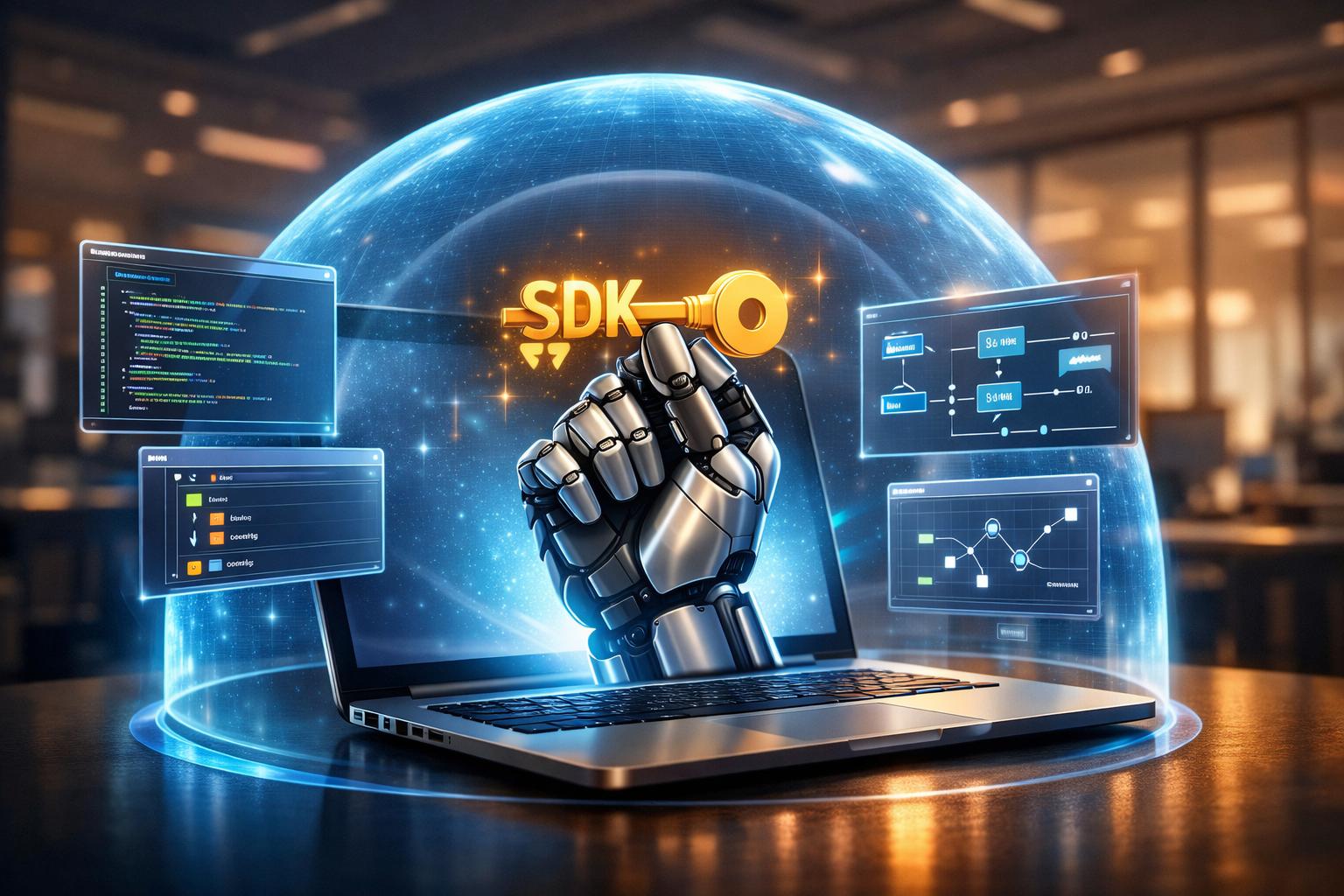
On April 15, 2026, OpenAI released a major update to its Agents SDK. This is not a minor patch — it represents a fundamental leap in capabilities. The new SDK introduces Sandbox isolation and an In-Distribution Harness, enabling enterprises to build safer, more powerful "long-horizon AI agents." What does this mean? AI Agents are no longer just chatbots that answer questions — they are digital workers capable of autonomously executing multi-step tasks within controlled environments.


Let's start with the sandbox mechanism. In the past, the biggest concern enterprises had with AI Agents was security — if an Agent can access files and execute code, could it accidentally leak confidential data? The new sandbox feature allows Agents to operate within an isolated workspace, accessing only the files and code required for specific operations while keeping the rest of the system fully protected. This addresses the core trust issue that has held back enterprise AI Agent deployment.


Next is the In-Distribution Harness. This feature gives developers granular control over how Agents interact with files and tools. You can define which system commands an Agent can invoke, which file types it can manipulate, and under what conditions human review is required. This is not an "all or nothing" permission model — it is a progressive trust mechanism.


The most notable aspect is the role transformation. Past AI assistants primarily "generated text" — you asked questions, they answered. The new Agents SDK enables AI to manipulate files, execute code, and invoke system commands. OpenAI's official language is remarkably direct: AI's role is shifting from "assistant" to "executive system." This repositioning has sent shockwaves through the industry.


This update must also be understood in a broader industry context. Just days earlier, Snowflake and OpenAI announced a $200 million strategic partnership aimed at accelerating enterprise Agentic AI deployment. Enterprises will be able to integrate OpenAI's models directly within Snowflake's Data Cloud, allowing AI Agents to securely analyze proprietary data, execute complex workflows, and make real-time decisions. This is not a proof of concept — these are real scenarios entering production environments right now.


However, opportunity comes with risk. Recent incidents have already demonstrated data exposure and system outages caused by misconfigured AI Agents. When AI transitions from "advisor" to "executor," the consequences of errors escalate from "an inaccurate piece of text" to "a real system failure." PwC's latest report also notes that three-quarters of AI's economic gains are being captured by just 20% of companies, indicating that most enterprises are not yet ready to harness this power.


My take: The real significance of this OpenAI update is not about what new features were added — it is about the official declaration that AI Agents have transitioned from "prototype" to "production." The arrival of sandbox and distribution harness features shows that the industry is finally taking Agent safety deployment seriously. But for most enterprises, the technical tools are just the first step — the real challenge lies in redesigning workflows, establishing governance mechanisms, and developing talent capable of "managing AI employees." 2026 is not the year of the AI Agent — it is the year of AI Agent governance.

AI & Automation Back to Blog