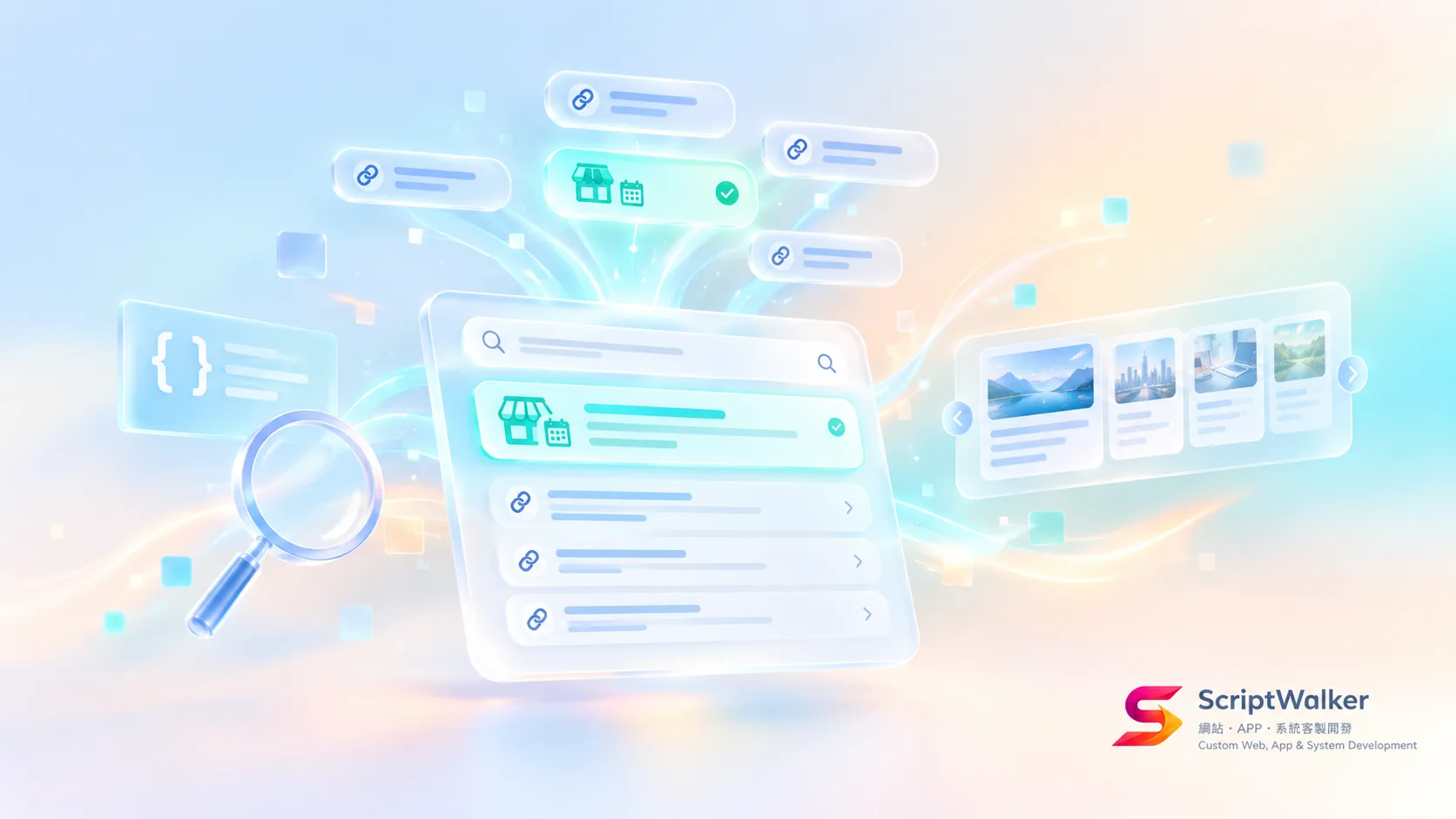
Short answer: More often, but mainly to official sites where people can finish a task. On October 15, Google said AI Mode and AI Overviews now show far more inline links and it is testing one or two "official site" links at the top of responses. SMB websites that let visitors book, order or check prices directly have the best chance.
On October 15, Hema Budaraju, VP of Product Management for Google Search, announced on the official blog a set of AI Mode and AI Overviews updates. Inline links have been substantially increased and appear higher up more often. News carousels expand to more locations and languages. Related links at the end get thumbnails. Google is also testing a section at the top that shows one or two official sites, with context on why each is useful. The headline number: people using Preferred Sources grew more than 7x since the start of the year. In short, Google is trying to make AI answers send people back to websites.
Why now? Over the past 18 months, AI answers cut clicks noticeably. A 2025 Pew Research Center browsing study found users clicked a traditional result 8% of the time when an AI summary appeared, versus 15% without one, and only 1% clicked a link inside the summary. Google said in mid-2025 that AI Overviews had more than 2 billion monthly users, so the front door of search has moved. Publisher complaints, regulatory pressure and site-owner distrust pushed Google to adjust links repeatedly since May 6, and a test of paying publishers was reported in late September. This update continues that line.
Rivals take different approaches. ChatGPT search and Perplexity put numbered sources beside sentences, with many links but clicks concentrated on the first two. Microsoft Copilot lists sources at the bottom. Google's edge is Business Profile, Shopping and Maps data that help it decide who is "official". The AI search category is shifting from "the most complete answer wins" to "send people where they can get things done".
The SMB impact is direct: if the top of an AI answer only shows one or two official links, the chosen site takes most clicks and the rest may only get traffic via comparison platforms. Below: the update, what three kinds of readers should do, and no-subscription preparation.
The details: five updates, one that matters most to SMBs
Bottom line: the official-site section under test matters most to SMBs; the other four mainly affect news and content sites.
| Update | Status | Who benefits |
|---|---|---|
| Many more inline links, placed higher | Live | All cited sites |
| 1–2 official site links with context at the top | Testing | Sites where users can book, buy or get exact info |
| News carousels and Preferred Sources in more regions and languages | Expanding | News publishers |
| Related links with thumbnails | Live | Blogs and content sites |
| Clickable creator names on video results | Testing | Video creators and publishers |
Who loses? Comparison and directory sites that live on summarizing others. When Google can send people straight to the official site, the middle layer matters less. Google published no click data, and the Search Console AI performance report still shows no clicks, so you must track results yourself.
What three kinds of readers should do now
Bottom line: owners turn the site into a place to get things done, marketers track branded queries, developers add structured data.
- Brand owners / SMB owners: make sure the homepage lets visitors book, request a quote, order or check opening hours, not just read a company profile.
- Marketers / SEO operators: filter branded queries in Search Console and log clicks and positions monthly; these are where official links are most likely.
- Developers / agencies: add Organization and LocalBusiness structured data with
sameAspointing to the Business Profile and social accounts so Google can confirm who is official.
AI visibility tool comparison
Bottom line: start with free Search Console; paid tools can wait for budget.
| Tool | What it shows | Price range | Best for |
|---|---|---|---|
| Google Search Console | Search and AI performance, queries, indexing | Free | Every site |
| Semrush AI Toolkit | Brand mentions and sentiment in AI answers | From about $99/month (see vendor) | Companies with marketers |
| Ahrefs Brand Radar | Brand mentions across AI platforms | Add-on, plan-based | Existing Ahrefs users |
| Profound | Multi-platform AI citation tracking | Enterprise quote | Large brands and agencies |
What Google won't tell you
Bottom line: more links do not mean more clicks, and Google decides what is "official".
- No click data: Google only says links are more numerous and clickable. Veteran observer Barry Schwartz questions whether earlier rounds brought traffic back.
- The official slot is winner-take-all: with one or two spots, if a booking or delivery platform is judged better for completing the task, you can lose even your brand query.
- Testing is not launch: the section is still a test with no announced regions or languages, so timing in Taiwan is unknown.
No-subscription alternatives for SMBs
Bottom line: three free steps you can finish in one afternoon.
- Unify official info: name, phone, address and hours identical across your site, Business Profile and Facebook.
- Give each task a page: separate pages for booking, price list and quotes, titled with the task, so AI can point to them.
- Track it yourself: build a GA4 report for branded landing pages and add a "How did you find us" question with an AI search option to your inquiry form.
FAQ
Will Taiwanese users see the official-site links?
It is still a test with no announced regions. Prepare your site now so it can be chosen when it launches.
How does an SMB get treated as the official site?
Let visitors complete tasks on your site, prove identity with structured data and a Business Profile, and keep details consistent everywhere.
Does Preferred Sources matter for ordinary companies?
Not much; it targets news content. Companies should focus on branded queries and task pages.
Should we buy an AI visibility tool?
Not under 50 inquiries a month. Search Console plus a source question on your form is enough.
My take
The mainstream reading is that Google is finally giving traffic back. My view: this update concentrates traffic rather than spreading it. More inline links will still funnel clicks to the few sites judged "official" or best for finishing a task, while mid-tier content and directory sites lose more. For SMBs, the key SEO metric for the next 18 months is not how often AI cites you, but whether your site captures your own branded queries.
For ScriptWalker (a Taiwanese Laravel/Flutter custom development studio), the implication is concrete: client websites must move from "company introduction" to "service entrance", with online booking, instant quotes and order lookup, plus tidy structured data and Business Profiles. That does more to win the top one or two spots than ten blog posts, and it is now a standard check in our website redesign projects.
Sources
- Google Blog: More ways to connect with the web from Search (2026-10-15)
- 9to5Google: Google AI Mode and AI Overview updates work to elevate links (2026-10-15)
- Search Engine Roundtable: Google Updates Links In AI Mode & AI Overviews Again
- Search Engine Land: Google updates AI Mode and AI Overview with more links
- Pew Research Center: Google users are less likely to click on links when an AI summary appears
- Google Search Central: Organization structured data