Blog

Blog & Insights

Expert articles on web design, app development, AI automation and digital transformation.

Websites for Law and Accounting Firms in Taiwan: Ethics Red Lines, 13 Search Terms, Three Budget Tiers and a 90-Day Roadmap Industry Case Study
2026.08.15 · 201 views

Websites for Law and Accounting Firms in Taiwan: Ethics Red Lines, 13 Search Terms, Three Budget Tiers and a 90-Day Roadmap

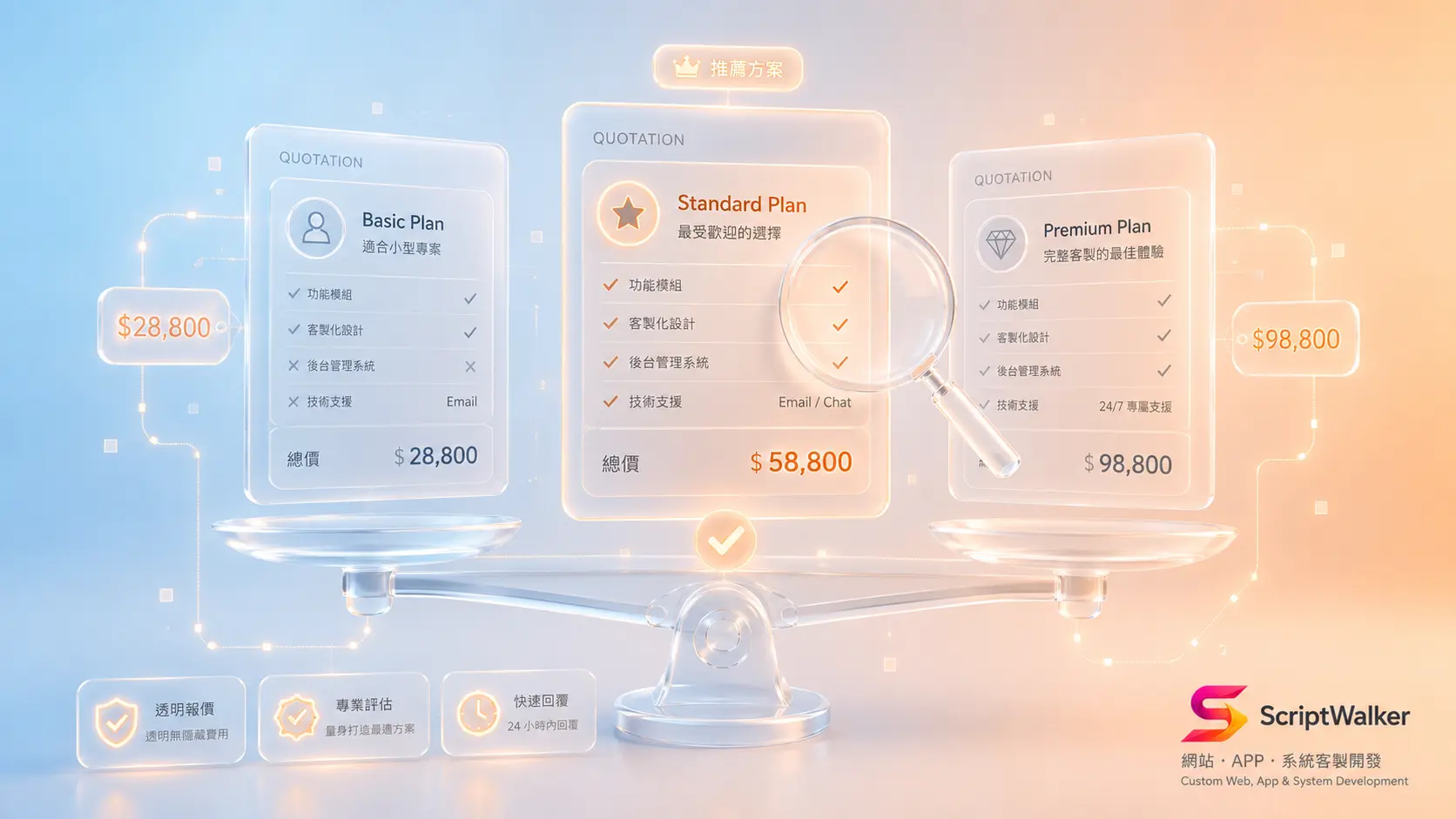
Taiwan had 13,016 practising lawyers at the end of 2025, up from 6,853 in 2013. On the accounting side there are 2,376 CPA firms and 4,107 practising CPAs (Financial Supervisory Commission audit oversight report, September 2025 data), plus more than 4,300 certified public bookkeeper offices. Supply has roughly doubled in a decade while demand comes from 1.715 million small and medium enterprises and a long tail of one-off personal engagements, almost all of whom now Google three firms before dialling anyone. Yet professional-services websites cannot be copied from other industries: Taiwan's Rules on Promotion of Legal Services explicitly forbid stating win rates, client names or past matters, so a banner reading "95% success rate" is already a violation. This piece breaks down keyword structure, must-have features, three budget tiers in New Taiwan dollars, seven landmines with fixes, and a 90-day roadmap.

Read More

Web Accessibility Done Right: WCAG 2.2 AA, Taiwan's Accessibility Badge, and Why Overlay Widgets Fail (With Real Costs and a 90-Day Roadmap) Services
2026.08.15 · 208 views

Web Accessibility Done Right: WCAG 2.2 AA, Taiwan's Accessibility Badge, and Why Overlay Widgets Fail (With Real Costs and a 90-Day Roadmap)

Most companies hear the word accessibility for the first time two weeks before a public tender deadline, or on the day a complaint email lands. WebAIM scanned the top one million home pages in February 2026 and found automatically detectable WCAG failures on 95.9% of them, averaging 56.1 errors per page. Chinese-language pages averaged 136.2 errors, 142.8% worse than the overall sample. This is not an edge case, it is the default state of the web. This article uses WCAG 2.2 AA and Taiwan's government accessibility badge as the frame: four remediation routes with real coverage and cost, a four-phase rollout with deliverables, the hidden line items nobody budgets for, five gaps between what clients expect and what actually happens, six traps with fixes, and what to verify at day 30, 60 and 90. A 13-item decision checklist closes it out.

Read More
A 6,000:1 Scrape-to-Referral Ratio Goes Free: Microsoft Clarity Hands Everyone the Blocking Lobby's Weapon, and Its Denominator Is Broken AI & Automation
2026.08.15 · 211 views

A 6,000:1 Scrape-to-Referral Ratio Goes Free: Microsoft Clarity Hands Everyone the Blocking Lobby's Weapon, and Its Denominator Is Broken

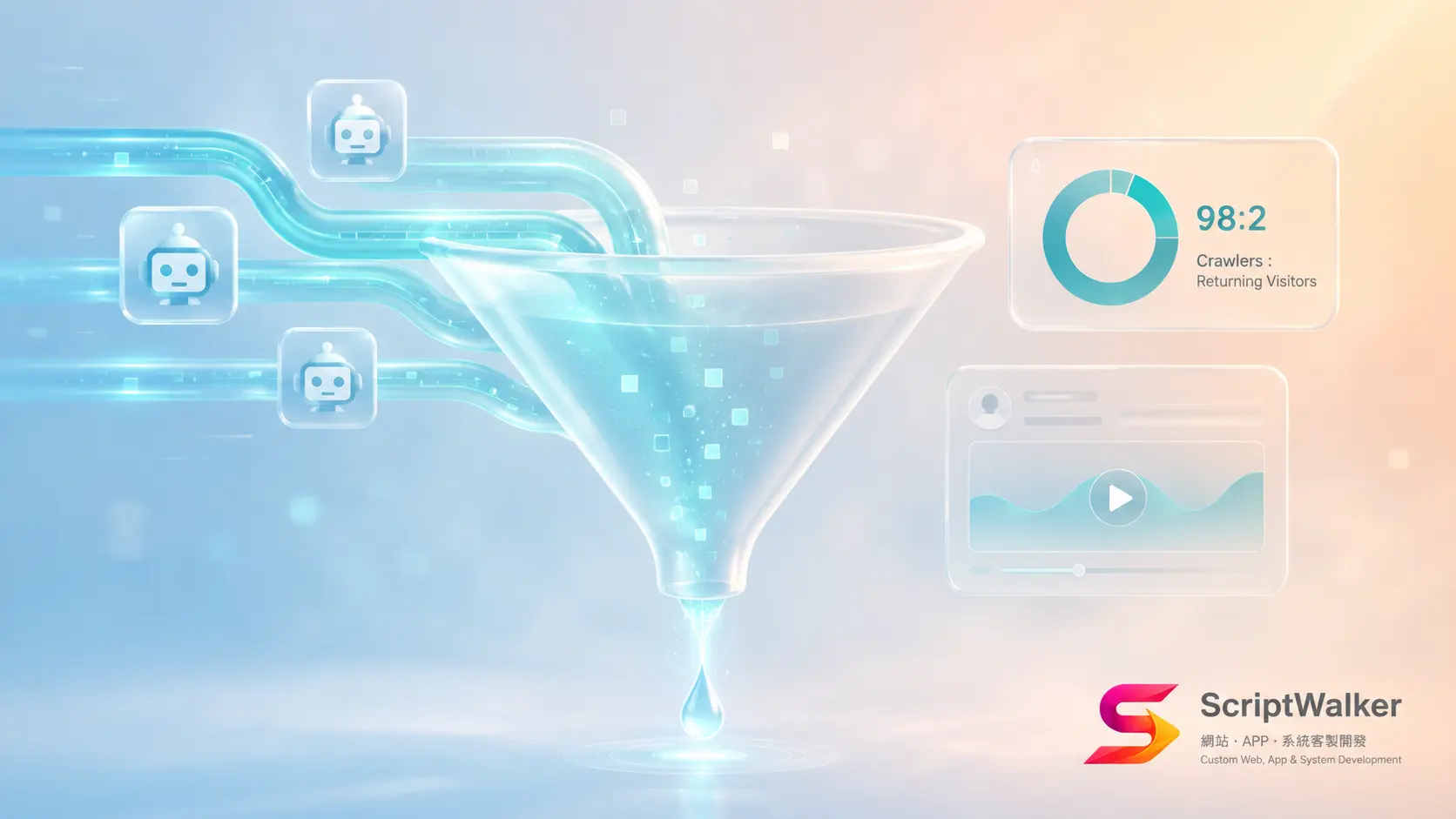
On 13 August 2026, Microsoft published AI Scrape-to-Referral Insights on the Clarity blog under a Clarity Staff byline, collapsing "AI crawl volume divided by referred visitors" into a single card inside the Bot Analytics dashboard. The product screenshot in the announcement shows an average ratio of 6,000:1 against 41 total referrals. Shipping alongside it: an operator-level ranked breakdown, mapped-domain coverage safeguards, and a one-click path from a referral source into session recordings with filters already applied. Free, with no traffic ceiling. Microsoft did not invent this ratio. Cloudflare published the first widely circulated crawl-to-refer analysis on 29 August 2025, showing one operator at 286,930:1 in January 2025, falling to roughly 38,000:1 by July, while another held near 1,091:1 across the same stretch. On 1 July 2026 Cloudflare productised it as Attribution Business Insights, with per-operator ratios running from 118:1 to nearly 50,000:1, gated behind enterprise Bot Management. The same company has set 15 September 2026 as the date Training and Agent crawlers get blocked by default on ad-carrying pages for newly joining domains. The number was a bargaining chip before it was ever an analytics metric. Context: AI crawlers accounted for roughly 4.2% of global HTML requests in 2025, a year when internet traffic grew 19%. The measurement layer is commercialising fast. Profound leads the AEO platform category on a $96M Series C at a $1B valuation; Semrush and Ahrefs sell AI visibility as add-on modules to existing suites; Cloudflare bundles it into enterprise tiers. Microsoft is going the other way: Bot Activity (21 January), Citations GA (13 May), Topic Insights (9 July), Query Topics beta (22 July), and now the ratio card — a fourth release in roughly five weeks, all free. Microsoft is not selling subscriptions here. It is trying to make Clarity the default analytics layer of the AI-mediated web. For small and mid-sized businesses in Taiwan, the interesting part was never the 6,000:1. It is that this card turns "should we block AI crawlers" into a decision that looks data-backed, while the denominator underneath it has been broken for over a year. What follows: what actually shipped, which half of the ratio is wrong, and how to measure this yourself without a CDN contract or a SaaS subscription.

Read More
When Your Outsourcing Vendor Goes Dark: A Single-Point-of-Failure Scorecard, a 72-Hour Playbook and a 90-Day Takeover Plan Services
2026.08.14 · 199 views

When Your Outsourcing Vendor Goes Dark: A Single-Point-of-Failure Scorecard, a 72-Hour Playbook and a 90-Day Takeover Plan

The thing buyers least want to think about and most need to plan for: if your vendor's phone is disconnected tomorrow, what is actually still in your hands. Studio-sized vendors are structurally fragile — three to eight people, one large client carrying revenue, the owner doubling as lead engineer. It does not take bankruptcy for one to disappear; an illness, a resignation or one broken cash-flow cycle is enough. Most buyers only discover on that day that the domain is registered under the vendor, the code lives in the vendor's GitHub organization and the database sits in the vendor's cloud account: the system still runs and nobody can change a line of it. This piece turns that into three usable tools — a Single Point of Failure score you can run before signing, a 12-dimension vendor viability scorecard, and a takeover timeline running from the first 72 hours to day 90. All figures are 2026 Taiwan market estimates, and we name the cases where we are the wrong fit ourselves.

Read More
How to Plan Backup and Disaster Recovery: RPO/RTO, the 3-2-1 Rule and Restore Drills, With Real Costs and a 90-Day Roadmap Services
2026.08.14 · 224 views

How to Plan Backup and Disaster Recovery: RPO/RTO, the 3-2-1 Rule and Restore Drills, With Real Costs and a 90-Day Roadmap

Most small businesses believe they have backups until the day they need to restore. Then they find the latest snapshot is 27 days old, the dump file is 0 bytes, or the backup lived in the same account as production and got deleted alongside it. Backup is not a question of whether a job runs. It is a question of how much data you can afford to lose and how fast you can be back, and both numbers belong to the owner, not the engineer. This piece uses RPO and RTO as the frame: four routes with their real cost trade-offs, published storage rates from Cloudflare R2, Backblaze B2 and S3 Glacier Deep Archive, a four-phase rollout with deliverables and tools, five gaps between what clients imagine and what happens, six traps with fixes, and what to verify at day 30, 60 and 90. It closes with a 13-item decision checklist.

Read More
AI Text Watermarks Go Global: A 1,682-Piece Study Says Rankings Drop 5 Spots — But That Is Not What It Proves AI & Automation
2026.08.14 · 236 views

AI Text Watermarks Go Global: A 1,682-Piece Study Says Rankings Drop 5 Spots — But That Is Not What It Proves

On 11 August 2026, Anthropic updated its official support page confirming that Claude models launched on or after 2 August embed an imperceptible, machine-readable watermark directly into every piece of text they generate — across Claude, the API, Claude Code, Claude Cowork and Claude Tag, worldwide, not just in the EU. The same day, B2B marketing firm First Page Sage published a controlled study: 139 websites, 1,682 pieces of content, watermarked material averaging position 11 on Google against 6 for un-watermarked, with citation rates of 7% versus 12%. Put those two headlines together and by evening the industry was saying AI content is being demoted. The trigger is Article 50 of the EU AI Act, effective 2 August, carrying penalties up to 15 million euros or 3% of global annual turnover. It requires generative AI providers to embed machine-readable marks in their output, text included. The underlying market number matters: Graphite's sampling puts roughly 49.9% of new web articles in Q1 2026 as primarily AI-generated, yet 86% of top-ranking Google pages are still human-written. Supply flooded long ago; ranking has not followed. Watermarking turns "who wrote this" from a guess into something checkable. Approaches have already split. Google's SynthID uses statistical text watermarking, has marked over 10 billion pieces of content, and has open-sourced its text implementation through Hugging Face. OpenAI leans on C2PA signed metadata. Anthropic does both. Detection has become its own market: Pangram raised $9 million in late July, and Substack wired it into every newsletter from 21 July. The category is shifting from who can produce the most content to who can prove where content came from. For a Taiwanese SMB this is closer than it looks. Your outsourced blog copy, the product description you had AI polish, the export site you wrote in Chinese and had a model translate — all of them may ship carrying a mark. Below: whether that study can be used as a conclusion, where the real risk sits, and how to protect yourself without paying for another subscription.

Read More
How to Build a Loyalty Points and Referral Rewards System: Point Rules, Anti-Abuse and Accounting Recognition Services
2026.08.13 · 235 views

How to Build a Loyalty Points and Referral Rewards System: Point Rules, Anti-Abuse and Accounting Recognition

A six-store bakery chain handed out paper punch cards for three years. Plenty of stamps got collected; only 11% ever came back to redeem, and nobody could answer which customers only show up during promotions. The real value of a points system is not giving things away, it is being the only data spine that stitches cross-channel purchase behaviour into a single line, and that works only if you settle three things up front: rules, anti-abuse and accounting. This breaks down four build options with their cost trade-offs, three budget tiers from NT$180,000 to NT$900,000 plus the points liability everyone forgets, a four-phase build with deliverables and tools, five gaps between what clients imagine and what actually happens, six traps with fixes, and which numbers to watch at day 30, 60 and 90. It ends with a 14-item decision checklist so you can decide whether to build, buy SaaS, or first go measure your repeat-purchase baseline.

Read More