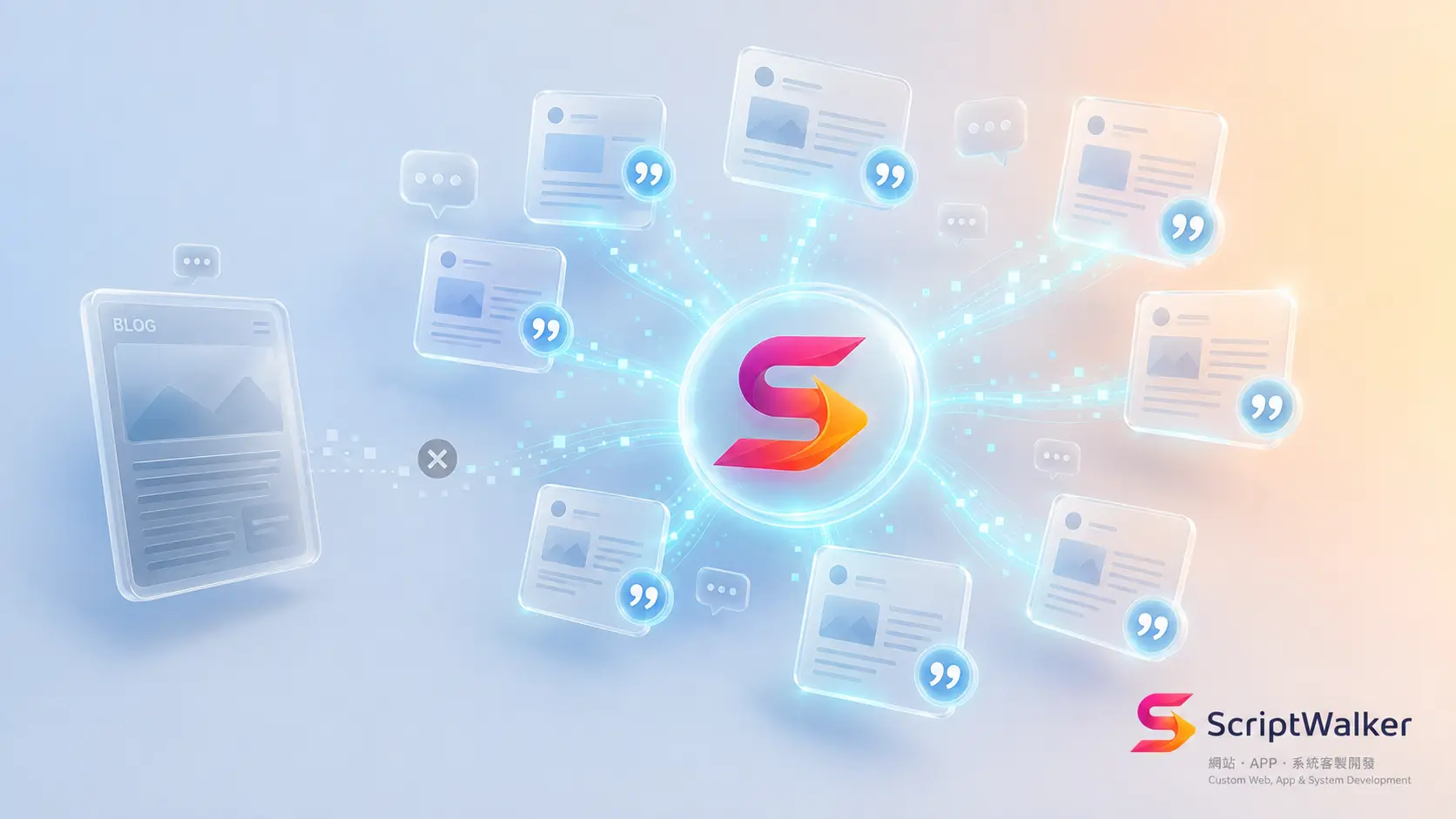
This summer of 2026, one set of numbers is upending the content-marketing logic of small businesses. According to Muck Rack's latest analysis of more than a million AI prompts, across ChatGPT, Claude, and Gemini, a striking 84% of AI citations come from earned media (third-party coverage, press, and social where others write about you), while only about 2.9% point to a brand's own domain. In other words, the company blog you pay to maintain is nearly invisible inside AI answers.
Why now? Over the past 12 to 18 months, the search entry point has slid rapidly from blue links to AI giving answers directly. Gartner predicted in 2024 that traditional search volume would drop 25% by 2026, and that has now come true; meanwhile AI Overviews cut organic CTR on AI-summary queries by roughly 58%–61%. When users stop clicking into your site, being cited by AI replaces ranking first as the new currency of visibility. And the newest data shows that currency is distributed in a way that is brutally unfavorable to brand-owned media.
This is not one tool's observation. Multiple 2026 reports corroborate: Muck Rack's May update gives 84%, another analysis finds only 2.9% of citations point to a brand's own domain while 75.2% go to peers, competitors, and vendors; a University of Toronto controlled experiment proves the preference is structural, AI search engines systematically and overwhelmingly favor third-party earned media over content you write yourself. By contrast, distributing an article across third-party news sites lifts citation rates from 8% to 34%, a 4.4x jump. The whole AI-visibility category is shifting from chasing rankings to chasing citations, and the key to citations is who talks about you, not how many times you talk about yourself.
For Taiwanese SMBs and agencies, this directly rewrites budget allocation: if in 2026 you still pour all marketing money into your own blog and SEO keywords, you may be feeding a channel AI barely reads. This article unpacks how real the shift is for you, what you can do today, and how a team without enterprise SaaS subscriptions can execute on its own.
Event Details and Full Numbers
- 84%: AI citations on ChatGPT/Claude/Gemini come from earned media (Muck Rack, May 2026).
- 2.9%: share of citations pointing to a brand's own domain; another 75.2% point to peers, competitors, and vendors.
- 4.4x: citation rate rises from 8% to 34% after distributing an article to third-party news sites.
- 58%–61%: drop in top-page organic CTR on queries with an AI Overview.
- Structural preference: a University of Toronto controlled experiment shows AI's bias toward earned media is systematic, not coincidental.
Put together, the signal is blunt: AI judges whether you are trustworthy by what others say about you, not what you say about yourself. For SMBs used to write-it-yourself, publish-it-yourself, rank-it-yourself, this is a mindset switch.
Immediate Actions for Three Reader Types
- Brand owners / SMB owners: shift part of your content budget toward being written about, contributing to industry media, going on podcasts, getting client stories covered by third parties, and building authoritative Wikipedia-grade entries. The goal is for AI to see your name on other people's sites.
- Marketing / SEO operators: adopt share of citations as a KPI instead of only keyword rankings. Regularly ask AI questions relevant to your industry, log who it cites and whether you appear, and fill the third-party sources where you are absent.
- Developers / agencies: a new service line. Help clients structure content (clear H headings, extractable statistics, FAQs, Schema markup) and build a digital-PR / earned-media outreach list. The tech-plus-PR combo is exactly what an agency can package and sell.
SaaS Tool Comparison Table
| Tool | Function | Pricing | Best for |
|---|---|---|---|
| Profound | AI citation/visibility monitoring across engines | Enterprise (high) | Mid-to-large firms tracking many brand terms |
| Muck Rack | Media PR + earned-media tracking | Enterprise | Brands prioritizing digital PR and third-party coverage |
| Scrunch AI | AI search visibility analytics | Mid-tier | SMBs starting to track AI citations |
| DIY (ChatGPT + spreadsheet) | Manual periodic prompting + logging citation sources | Near free | Budget-limited teams tracking a few core questions |
What They Won't Tell You
1. Chasing earned media does not mean buying a pile of press releases. The data also shows plain press releases are often invisible to AI too. AI favors sources with real substance discussed by real media and communities, not canned wire floods. Spraying press releases may still go unread.
2. Citation is not trust, and not conversion. Being mentioned by AI is only step one; research notes that being cited and being believed/clicked are different things. Tying KPIs solely to citation counts can chase vanity metrics.
3. Most of these numbers come from English-language corpora. Taiwanese SMBs beware: the Traditional-Chinese AI citation ecosystem and authoritative-source distribution may differ. Test your own industry questions in Chinese before copying English conclusions.
SMB Alternatives Without a SaaS Subscription
- Build a citation-tracking sheet: list 10-20 core industry questions, ask ChatGPT/Gemini/Perplexity each monthly, and log who it cites in a spreadsheet.
- Make an earned-media list: map your industry's media, podcasts, communities, and forums (including PTT, Dcard, industry groups), and pitch or offer interviews.
- Make existing content extractable: add clear subheads, quotable stats, FAQs, and structured data (Schema) to lower the bar for AI to excerpt you.
- Win testimonials and third-party case studies: your name on someone else's site beats ten more of your own blog posts.
FAQ
Should I still run a company blog?
Yes, but its role changed. The blog is still your home turf and trust base, but do not expect it to be the main source of AI citations. Treat it as raw material for earned media and a conversion landing page, not a traffic gateway.
How do SMBs start earning earned media?
Start with the easiest: pitch client stories to industry media, do podcast interviews, and answer expert questions in authoritative communities. Accumulate 3-5 third-party mentions before scaling.
Should I pay for an AI-visibility monitoring tool?
Run the free DIY tracking method for a month or two first to confirm which questions you are absent from, then decide whether to upgrade. Most small teams can start with a spreadsheet.
My Take
The mainstream reads this as "digital PR is back," but I think the shift is deeper: AI has outsourced credibility to third parties, and brands are losing control of their own narrative. My contrarian call: over the next 12 to 18 months, a wave of SMBs that only tend their own content will vanish from the AI channel, then realize too late that traffic stopped coming from there. But I would not go all-in on earned media either: English-corpus conclusions do not transfer cleanly to the Traditional-Chinese market. The smart play is owned content as a base, earned media as amplification, monthly real-world testing as calibration. The lesson for ScriptWalker: content structuring + Schema + a digital-PR outreach list can be packaged into a new service line. We already have the tech; add the PR and citation mindset, and that is an agency's differentiation in the AI era.